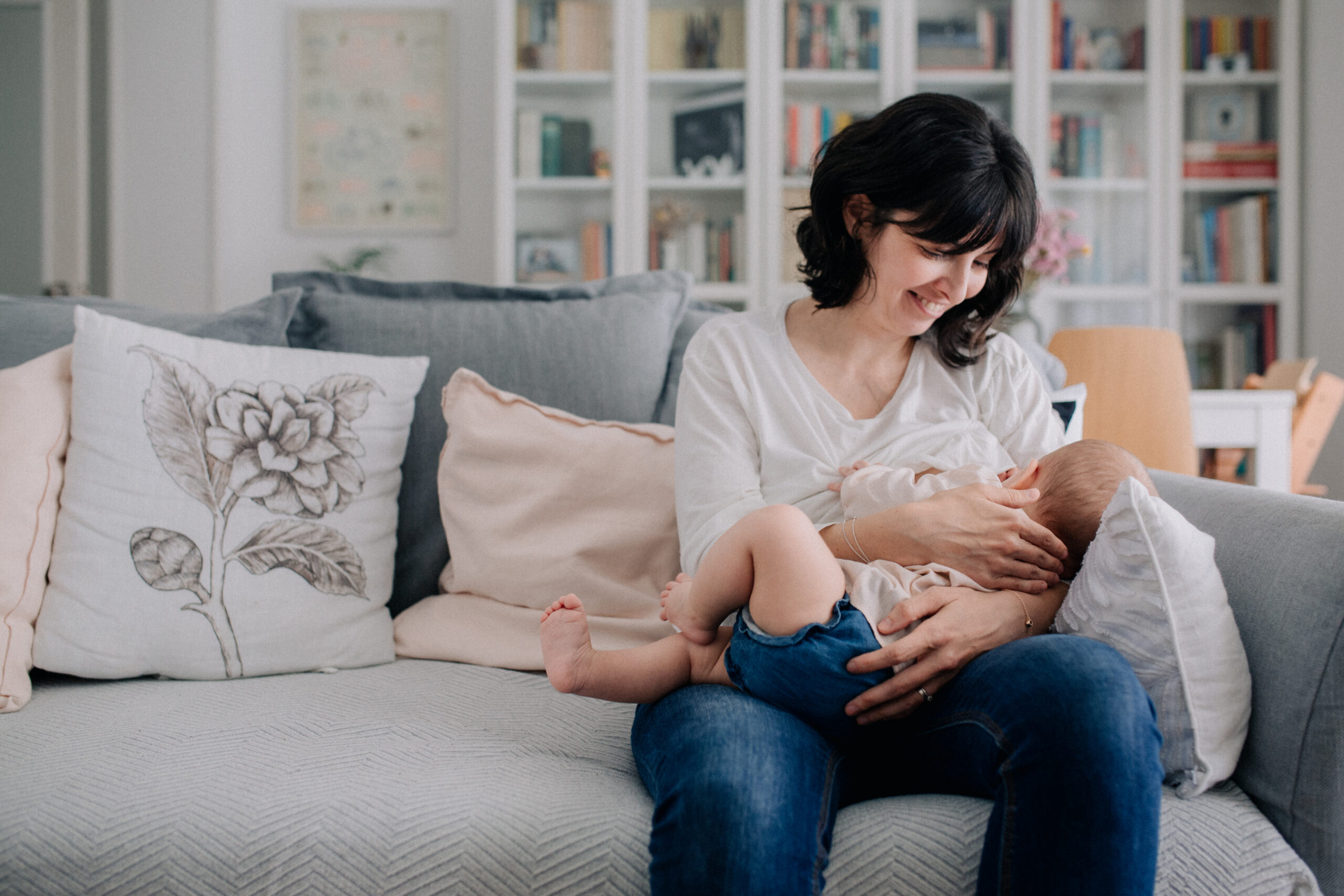





Kangarooing: why is it worth it?

If you're expecting your first or subsequent child, you're probably familiar with the concept. But do you know what kangaroo care looks like in the hospital , based on current recommendations? Want to learn all the benefits of this contact? Or perhaps you're unsure whether kangaroo care after a cesarean section is possible? We've got a compendium of information that will answer many questions about kangaroo care—after a C-section , vaginal birth, in the hospital, and at home.
The birth of a child is for parents one of the most intense experiences they have ever experienced in life. This is the moment of meeting with a long-awaited creature, thanks to which they become a family. For a toddler, however, it is a moment of great stress, because he leaves the safe environment of the mother's womb and enters a bright, cold, noisy and strange place.
Right after birth
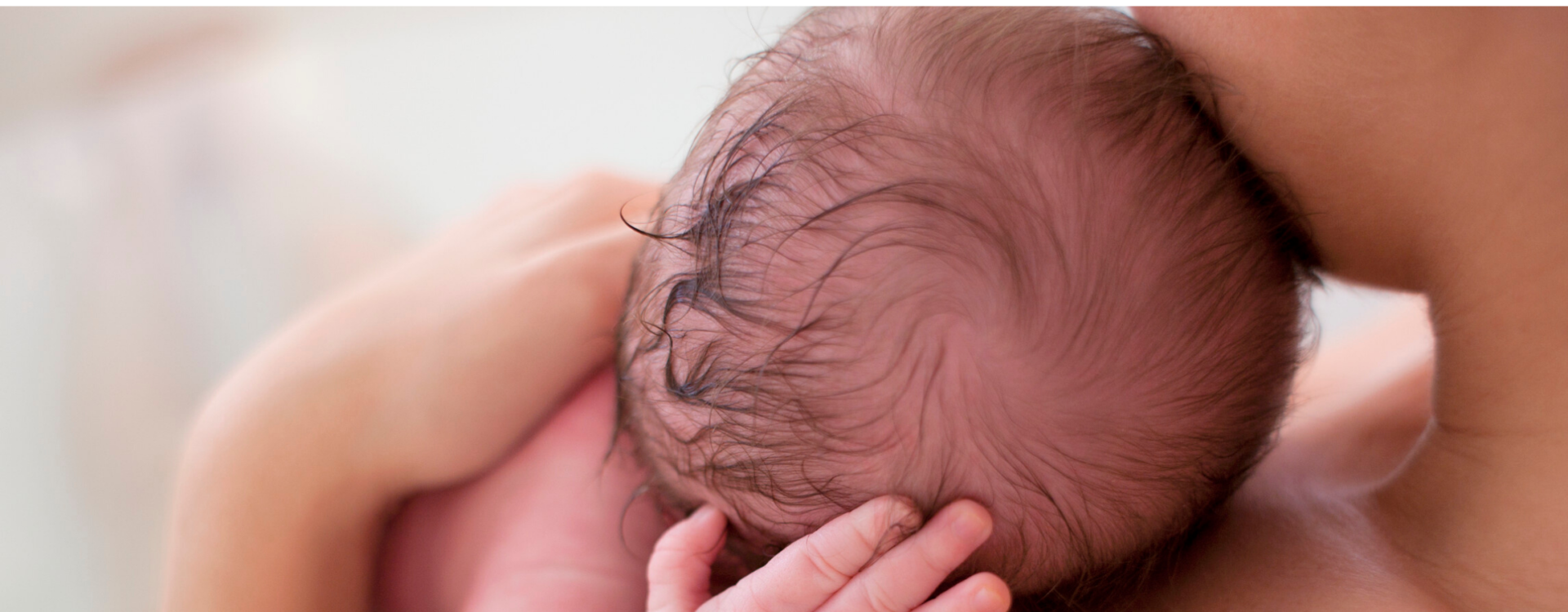
Fortunately, kangaroo care, or skin-to-skin contact with a newborn, is now a common practice, allowing the baby to be placed directly into the safe, warm arms of their mother immediately after birth—even before the umbilical cord is cut. It's important to note that the term "postpartum kangaroo care," though often used, is incorrect, as the subject of kangaroo care is the baby who is "postpartum," not "after birth ." Therefore, remember: not "postpartum kangaroo care," but "postpartum kangaroo care."

Touch first
Newborns, as we know, don't yet have a developed sense of sight, their vision is very blurry, and they don't distinguish colors. As for tactile sensitivity, it's largely developed by the 14th week of fetal life. It's thanks to this sense that a baby, placed on its mother's belly shortly after birth, has the opportunity to feel safe in a new, unfamiliar world. It feels not only warmth but also its mother's scent and heartbeat. It knows this sound from its prenatal life, having heard it for many months. The baby calms down, and consequently, so does the mother.
Where did the idea of kangaroo fishing come from?
The beneficial effects of kangaroo care were discovered in the 70s by doctors at a hospital in Bogotá, Colombia . Due to a shortage of medical equipment and staff, they gave premature babies to their mothers to warm them with their own body heat. The beneficial effects quickly became apparent. Premature infant mortality dropped from 70 percent to 30 percent. This discovery began a slow process of change in maternity wards around the world.
Kangarooing - why is it worth it?
Skin-to-skin contact, especially in the early stages of a toddler's life, is of great benefit to both the baby and the mother. Some are visible immediately, others appear over a longer period of time. Kangarooing has an impact not only on psychophysical health, but also on the emotional sphere.
What does the baby gain?
Thanks to kangarooing:
- first of all, it calms down,
- feels safe in mother's warm arms,
- postpartum stress is alleviated,
- colonization with the physiological flora of the mother takes place,
- less often experiences problems with the respiratory, immune and cardiovascular systems,
- instinctively moves towards the breast and starts to suck it,
- it is gaining weight faster,
- falls asleep faster when in skin-to-skin contact, falls into deep sleep more easily, sleeps more calmly,
- if born prematurely, they recover faster,
- the closeness with the parent has a very large, positive impact on shaping the mutual relationship.
Of course, not only the newborn child benefits from this contact. It also has a great influence on a young mother.
Expert advises
During kangarooing after birth, the so-called thermal synchronization. This means that when the baby gets colder, our body temperature rises, while when the baby is warmed up, our temperature drops to cool him down a bit. It is especially important in the case of premature babies who have problems with maintaining the correct body temperature.


What does mom gain?
In the case of we have kangaroo:
- stimulates lactation,
- reduces postpartum stress,
- builds a bond,
- reduces the "baby blues" or sadness sometimes felt by mothers after childbirth,
- supports in the first period of parenthood, giving a feeling of confidence in being a mother,
- causes the uterus to contract faster,
- increases sensitivity to the toddler's needs.
In addition to the mum, the dad of the newborn can and should also kangaroo. Regardless of when and how the baby is born, kangarooing is the best gift that parents can give him at the beginning.
Kangarooing of a premature baby
We already know that the very idea of kangarooing was created with premature babies in mind - incl. in response to an insufficient number of incubators. The results of the research have shown that the practice of kangarooing a premature baby is much more important and has a very significant impact on its further development.
Expert advises
Unless there are medical contraindications, premature babies should also experience skin-to-skin contact - as long as they are breathable. The neonatologist or pediatrician decides whether such newborns can be safely kangaroo-sized.
Kangaroo care for premature babies is performed by the mother or father adopting a semi-reclining position and placing the baby on their chest. An elastic band is often used for better support and additional swaddling. Depending on the baby's condition and the caregivers' abilities, kangaroo care for premature babies can last, for example, an hour at a time and be repeated two or three times a day.
In addition to the aforementioned thermal synchronization mechanism, which helps the toddler maintain an appropriate body temperature during skin-to-skin contact, kangarooing a premature baby has a positive effect on later breastfeeding, fosters emotional bonding, and makes parents learn the child's reflexes and reactions faster and get used to it. take care of him.
No kangarooing
Both the birth itself and the development of the situation afterward can have a significant impact on the child's future. According to scientists, the lack of postpartum kangaroo care is responsible for negative effects that can be felt for many years or even for life.
The possible consequences of not kangarooing in a hospital - right after birth and later at home - include:
- deficit of self-control and control over emotions,
- worse sleep quality,
- greater susceptibility and stronger reaction to stress (higher levels of cortisol - the stress hormone),
- problems with independent functioning,
- reduced empathy (impaired recognition and reaction to the emotions of others).
Kangarooing in practice
Even aware of the need for kangarooing a newborn baby and its benefits, parents do not always know how to proceed from the practical side - when to start and how long kangarooing should last in the hospital and at home. First, however, a few words about what to do when medical reasons do not allow the mother to have such contact immediately after childbirth. What about, for example, kangarooing after cesarean section?
Kangarooing after caesarean section
There are situations in which, unfortunately, the mother cannot participate in the first skin-to-skin contact for medical reasons. It's important to know that the actual delivery by cesarean section shouldn't be an obstacle in this regard. Kangaroo care after a cesarean section may have some limitations, not allowing for as much free contact with the baby as after a vaginal birth, but cuddling the newborn is absolutely possible. Kangaroo care after a cesarean section is very beneficial for the newborn's microbiome, because the baby born this way, without passing through the mother's birth canal, is deprived of contact with her bacterial flora. Skin-to-skin contact allows for colonization with "good" bacteria, which have a positive impact on the newborn's health. Even with other contraindications, we don't have to forgo this beneficial contact for the baby if the father takes it on. Duty... The benefits for the child will then be similar, while the closeness and bond that the new father creates with his little one cannot be overestimated, which can fantastically shape the relationship with the child for years to come. By practicing kangaroo care daily, the new father will relieve the mother during the first, most intense phase of motherhood , and, crucially, he will not feel left out, but rather more needed by both of them.
Kangarooing in the hospital as a standard
Kangaroo care has become an official medical practice , with standards developed by the World Health Organization (WHO) in 2003 as recommendations for premature and full-term infants. In Poland, these recommendations are being promoted as part of the "Kangaroo-Friendly Hospital" campaign, which the Institute of Mother and Child also joined.
According to the current standards for perinatal care in our country, a newborn should be placed on its mother's abdomen after birth, provided both parents' condition allows . It is recommended that uninterrupted skin-to-skin contact—as also mentioned in the standards—last two hours after birth.
Kangarooing - how long?
Parents often ask about kangaroo care – how long is it necessary? Initial contact should last until the first feeding is completed . Only then can we begin examining the newborn. Of course, this assumes that the birth has gone smoothly and both mother and baby are doing well.
When it comes to first-time kangaroo care in the hospital, it's recommended that uninterrupted skin-to-skin contact— as also mentioned in the aforementioned perinatal care standards —last two hours after birth . The baby is then examined and returned to its mother. There's essentially no time limit for this type of closeness. It can be done for several hours a day, and your little one will certainly be happy.
Kangarooing after returning home
We already know that kangaroo care can take place for many hours each day. However, sometimes we have to attend to other responsibilities and wonder how to kangaroo care for our little one. There is a solution. Special kangaroo wraps are available on the market (we wrote more about wraps and babywearing here ), which can be useful in such situations. Immediately after the birth of a baby, a new mother, besides peace and quiet, needs sleep most. With dad's support, it's worth carving out as much time as possible for this during the day. Peaceful sleep in close contact with the baby not only provides essential regeneration but also creates a unique bond and beautiful memories that will last a lifetime.
Author