




How to teach a child to ride a bike – without stress, tears and training wheels?

The moment a child lifts their feet off the ground for the first time and begins to ride, pedaling, is a magical moment that will remain etched in the memory for years, for both children and adults. Whether your child is a 4-year-old or a 10-year-old who still can't ride a bike and whose balance issues keep them up at night, there are proven ways to teach your child to ride a bike without tears or excessive stress.
In this article, we'll tell you how to teach your child to ride a bike without training wheels , when it's a good idea to introduce a bike with pedals , and how to make this adventure safe, effective, and full of joy.
When does a pedal bike start? Check if your child is ready.
You might be wondering when it's best to introduce a pedal bike to your child. There's no single, universal answer to this question, as every child develops at their own pace, both physically and emotionally. At what age is a child most likely to accept a pedal bike without major difficulties?
The optimal age for switching to the first pedal bike (with 14” or 16” wheels) is usually between 3,5 and 5 years of age.
It's important not to delay learning until school age - an 8- or 10-year-old who can't ride a bike is already much more afraid of potential dangers, such as falling, than younger children, who often approach learning with more carefreeness.
Since when did you need a pedal bike? Don't force yourself to give up cross-country skiing!
It's crucial that the child takes the initiative to learn , and that the parent simply picks up on it, rather than forcing it. If your child still enjoys the balance bike, let them do so – rushing into a pedal bike can only discourage them.
How to teach a child to ride without training wheels? Start with a cross-country bike!
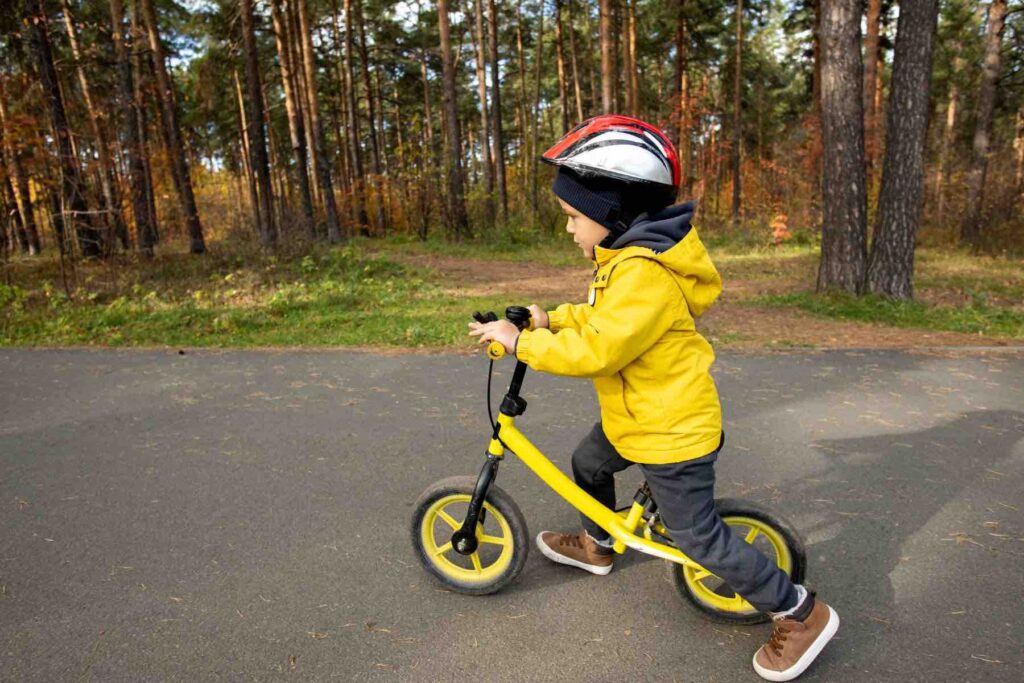
Before you start thinking about how to teach your child to ride a bike without training wheels , it's worth making sure you have a solid foundation – and a balance bike is the best place to start.
This simple yet ingenious piece of equipment develops a child's balance skills , precisely what determines their future success on two wheels. Children who have regularly used balance bikes typically have no problems balancing on a bike and often "get" the idea of riding a pedal bike more quickly.
Sometimes, it only takes a few moments for a child to start riding independently, once they switch from a cross-country bike to a pedal bike.
A 10-year-old can't ride a bike i but Balance problems on two wheels? Introduce cross-country skiing for older kids too.
Remember that even if your child starts learning on a pedal bike , you can temporarily remove them and lower the saddle as low as possible so they can use it like a balance bike. This will help both your little one and your older child become familiar with the new equipment and, above all, eliminate any balance issues on the bike.
Children riding cross-country skis intuitively lift their legs and balance their entire body , perfectly preparing for riding a traditional bicycle with pedals.
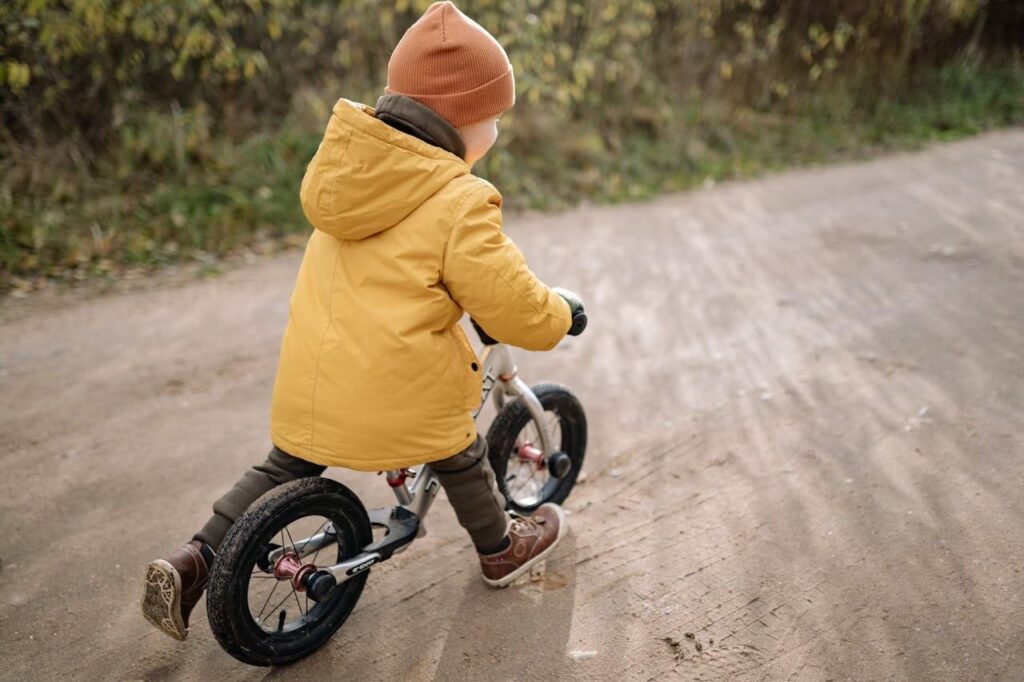
If your child has already mastered a balance bike, learning to ride a bike without training wheels will be much faster and more effective.
Side wheels – trap or help?
A common question is whether it 's worth installing training wheels when teaching a child to ride a bike . According to experiences shared on almost every parenting forum online, training wheels can delay learning to ride independently , contributing to balance problems, especially if the child has previously ridden a cross-country bike and has already learned to balance.
Some people point out that installing training wheels in this case is a step backwards in learning to ride a bike.
If you want to teach your child to ride a bike, consider completely eliminating training wheels.
A bike with side wheels prevents the child from correcting the position and balancing on their own , which is a direct path to problems with balance on the bike.
The training wheels give a false sense of stability , and removing them can cause a child (especially an older one, e.g. a 10-year-old who cannot ride a bike ) to become panic-stricken with fear of falling, which effectively hinders learning to ride a bike.
Of course, many children have no problem removing their training wheels and riding independently—some parents find training wheels very helpful when teaching their child to pedal . However, there are definitely better methods of support and learning to pedal that support independent balancing on two wheels.
Recommended products


Senior specialist in the Department of Assessment and Cooperation Development, Institute of Mother and Child

How to teach a child to ride a bike? Try the scarf trick, without training wheels!
Once your child has mastered balance on a bike —for example, with a balance bike—and is enthusiastically climbing onto a pedal bike, it's time to get down to specifics. Many parents wonder how to teach their child to ride a bike without training wheels without dragging it out for weeks. There's a great method that often works in literally fifteen minutes!
Reach for a scarf or bandana
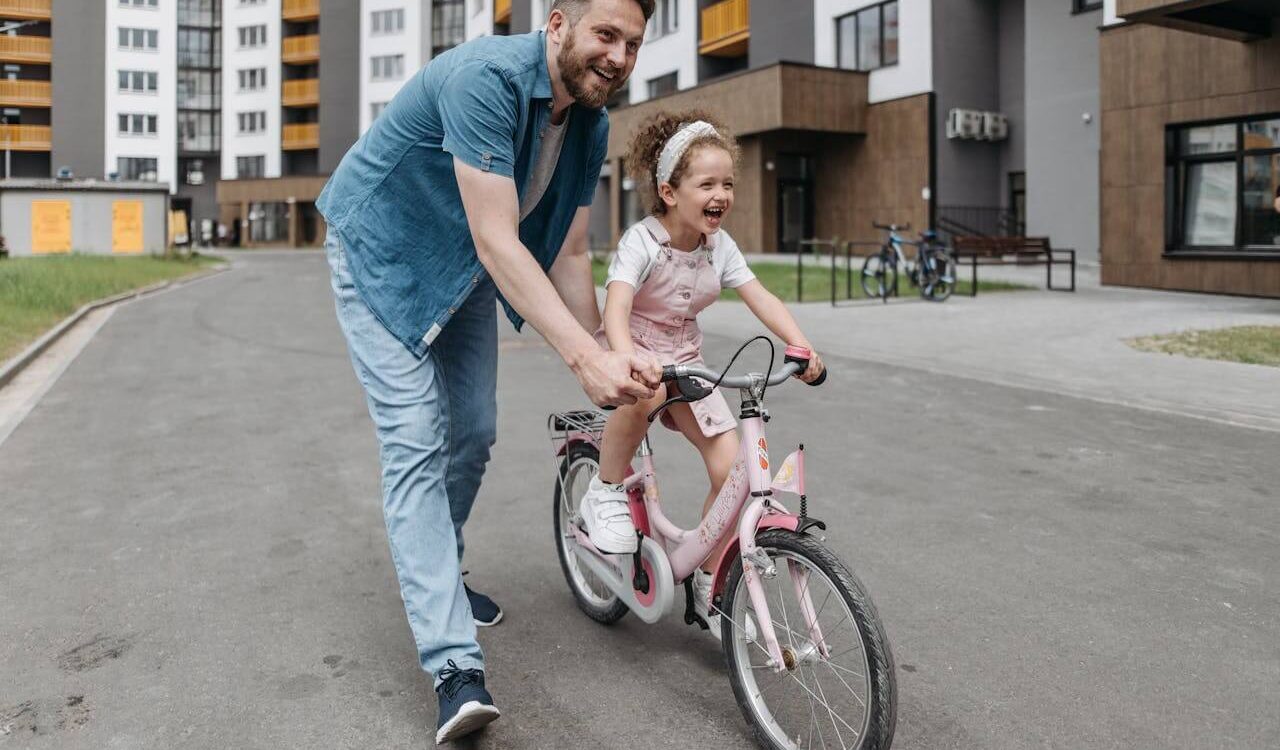
Thread it under your child's arms, crossing it slightly across their back and holding the ends in your hands . If you want to teach your child to ride a bike without stress, try this simple, ingenious way of securing your little one – the parent runs alongside, able to gently support the child at any time if they're about to fall, but without blocking their body or disturbing their balance.
The child learns to balance on his or her own , taking full control of the bike, which significantly speeds up learning to ride without training wheels.
How to teach a child to ride a bike ? For many children, this method proves to be a breakthrough – 10–15 minutes of practice is enough for them to start riding independently.
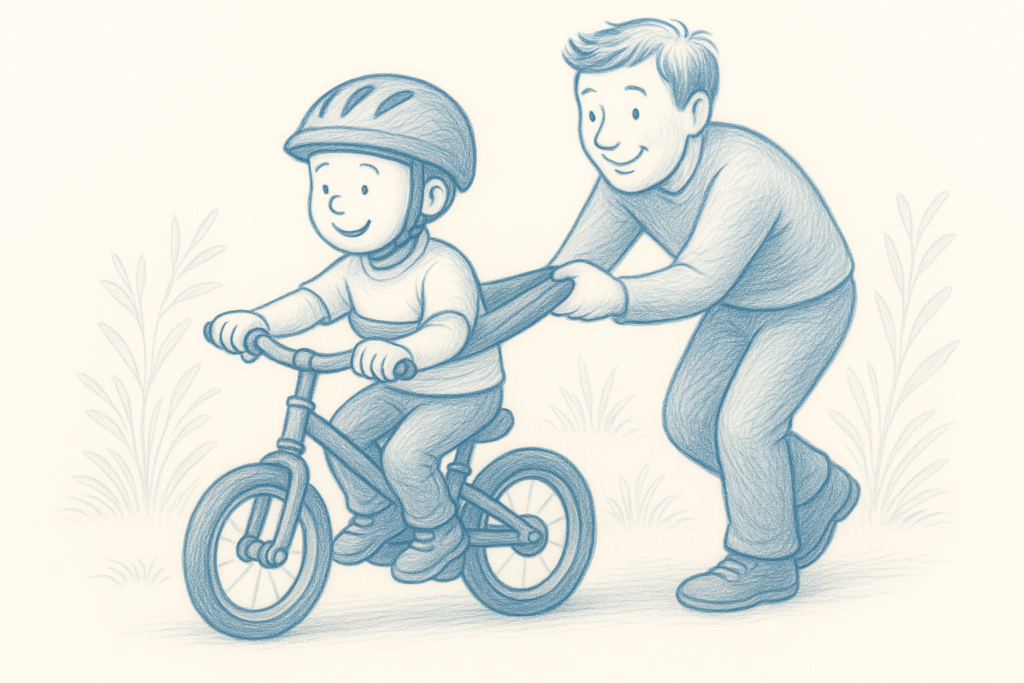
You don't need to look for special training routes – choose a safe place: for example, a park, a grassy area, or a paved forest path without obstacles . The important thing is that your child can ride straight and safely, away from busy roads.
How to teach a child to pedal and brake? Quick and safe methods.
While riding, children often focus on the pedals or front wheel, which destabilizes the ride. It's important to constantly remind them to "Look ahead!" and "Hold the handlebars firmly! "
Already at this stage, it is worth teaching the child how to use the rear wheel brake - if the bike has two brakes, for safety reasons it is crucial to teach the child how to brake the rear wheel first (learning to use the front wheel brake can be left to the later stages of learning).
Explain what the brake is for, let your child practice pressing the lever , and even play a game of “red light/green light” on a straight, safe road to get them used to braking.
If you want to teach your child to ride a bike safely , braking is a key skill that is often more difficult to master than pedaling itself.
How to teach a child to pedal?
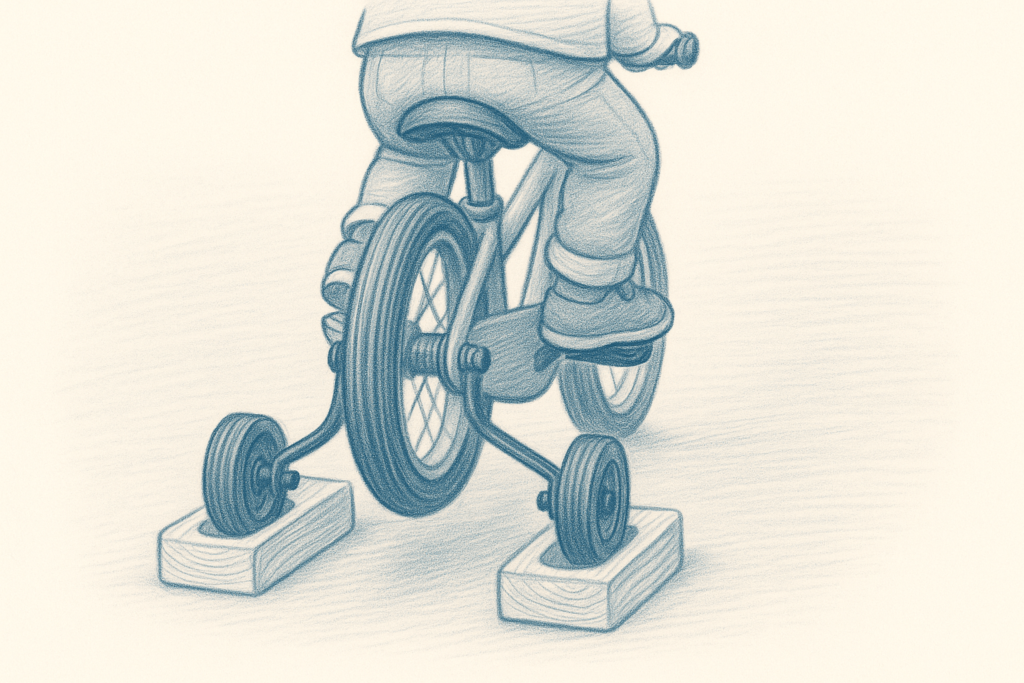
Before heading outside, it's a good idea to practice pedaling at home – it's a safe way for your child to become familiar with leg movement without the pressure of maintaining balance. How can you teach your child to pedal?
Position the bike so that the rear wheel is raised off the ground – you can do this by holding the bike by the saddle if a second person is supporting the child.
If the bike has training wheels , if you want to teach your child to pedal , you can place the side wheels on two stable, not too high, wooden blocks (first, carve out delicate recesses in them, perfectly matching the shape of the training wheels) – this will raise the rear wheel, allowing your little one to focus solely on the movement of their legs. Once pedaling is mastered, it will be easier for your child to pedal outside – while still in motion.
If you want to teach your child to ride a bike, don't forget the helmet!
Make sure the bike is properly adjusted to your child's height – this is essential for comfort and safety. When learning to ride, your child should be able to place their feet comfortably on the ground while sitting on the saddle.
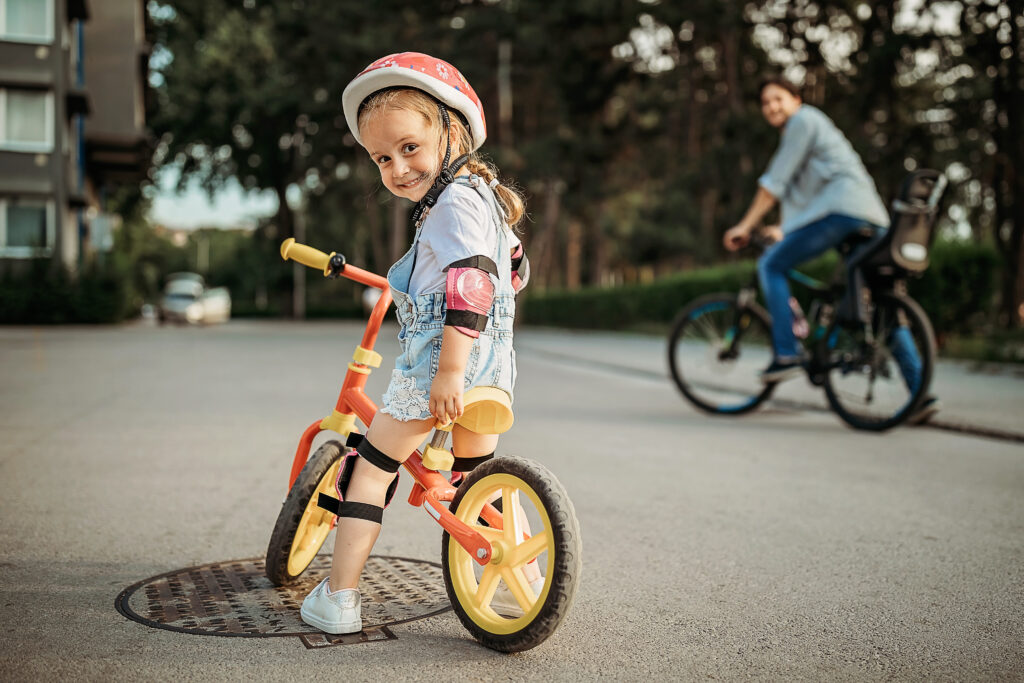
Helmet, protectors, and appropriate footwear when learning to ride a bike
A bicycle helmet is mandatory to protect the head from injury – it should be worn even on a balance bike. It's also a good idea to equip your child with knee and elbow pads when they first start learning to ride , which will mitigate the effects of inevitable falls.
When teaching your child to ride a bike, remember to wear appropriate footwear – compared to flip-flops or sandals, closed shoes provide better grip while pedaling.
Additionally, it is worth equipping the bike with reflectors, lighting, and a chain guard.
How to Teach a Child to Ride a Bike? Peace, Support, and Faith in Success
Learning to ride a bike doesn't have to be difficult or stressful – you just need to understand when your child is ready for a pedal bike and how to support them in their first attempts. Whether they're a young cross-country bike champion or a 10-year-old who can't ride a bike – every child can master this skill if we give them the time, space, and a sense of security.
Simple methods like scarf training or a home trainer really work and help your child learn to pedal and balance on a bike without the need for training wheels.