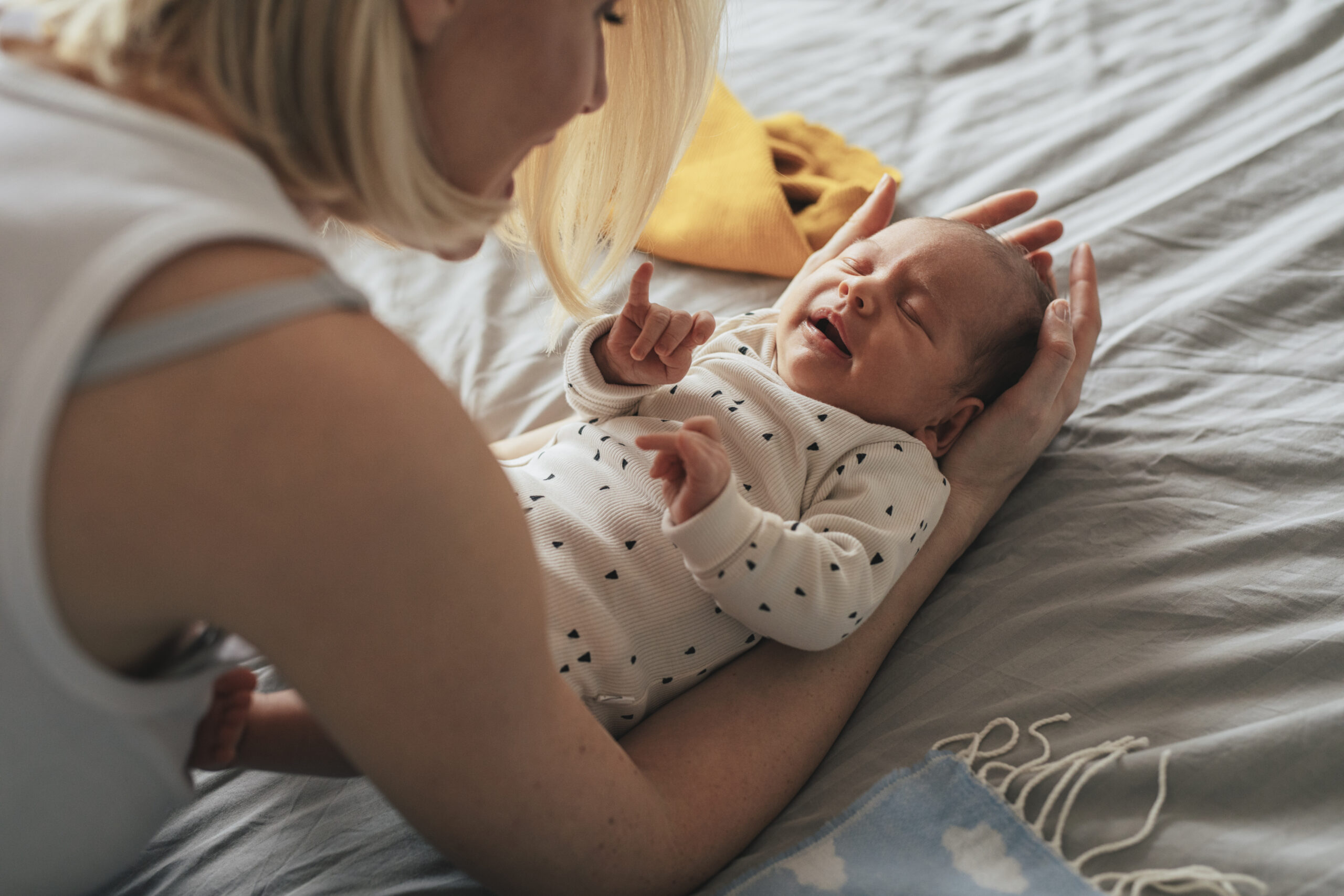





How to calm a newborn baby?


Should we be concerned about a crying baby? How do we calm a crying baby , especially a newborn ? What do experts recommend for soothing a baby ? The question of how to calm a baby isn't just about newborns and infants, but their crying, screaming, whining, or irritability can often be a real challenge for parents. There are many ways to calm a crying baby ; the trick is to find the one that works best for each individual.
When a small child starts crying, we instinctively want to soothe them. However, it's important to remember that crying is a way for a small child to communicate with the world. A baby cries because it has to. There's no other way for them to communicate that something's bothering them, that they want to be held, or that they want to take a nap. There's no need to panic every time a baby starts whining. It's important to hear and recognize their needs – this will help us better understand how to soothe them in a specific situation.
A baby's cry, that is, a need to be gratified
A crying baby signals that it is seeking the fulfillment of some need – most often we associate it with the feeling of hunger or the desire for closeness.
Cuddling , hugging, and kangaroo care are activities worth trying when you're unsure how to soothe a newborn. These activities increase levels of oxytocin, the hormone responsible for a sense of bonding and security in both mother and baby.
If a newborn is searching with his mouth, shaking his head, or sucking his fingers, he's signaling, not just by crying, that he's hungry and thirsty. Feeding also soothes a newborn. Sometimes a baby simply needs sucking , which is an incredibly soothing activity in itself.
Dry diaper and thermal comfort
If you're wondering how to soothe a newborn who suddenly starts crying, check to see if they need changing. Another important element in soothing a baby is changing their diaper . A baby's skin is very sensitive. A heavy, cold, wet, or soiled diaper can be irritating, and irritation can be painful. That's why changing a diaper is so important to keep them comfortable. A baby's crying can also stem from anxiety related to thermoregulation—they may be too cold or, more often, too warm. A crying baby may demand to be changed . It's a good idea to check the baby's neck to see if they're cold or sweaty by touching their hands and feet. The temperature of their feet and hands is not reliable.
The soothing noise helps to calm down
To soothe a baby, we can use white noise , which, with the right intensity and tone, has a soothing effect on a crying baby. This is white or pink noise, which corresponds to what can be heard in the mother's womb during fetal life . Toys that produce this type of sound have gained popularity, often becoming a ready-made answer to the nagging question of many parents: what to use to soothe a baby. It's important that such a product provides the child with a sense of comfort and safety during use. Features worth considering when choosing include the volume and duration of the noise, an automatic shut-off, and a sensor that activates the device when the baby begins to cry.
Important voice and facial expressions
Another useful technique when trying to calm a crying baby is to talk to them. Research shows that the higher pitch of the human voice helps calm crying babies . In addition to the voice , eye contact and a calm, gentle facial expression are also important.
Expert advises
Babies get all their knowledge about the world in which they appeared, from the faces and facial expressions of their adult caretakers - mom and dad. If the face of a loved one is emotionless, thoughtful and hostile, or if there is sadness or tension on it, the child feels this state and treats it as a threat, reacting with anxiety.


Calming rocking and rocking
Rocking – whether in the arms, in a cradle, bouncer, stroller, or even a car seat – usually has a calming effect on a crying infant. During the nine months of pregnancy, the baby has become accustomed to being rocked in the mother's womb and has come to appreciate it. However, it's important to exercise moderation and observe the baby carefully. Notice whether the rocking we offer is enjoyable, or whether it's so startling and nervous that the restless infant becomes silent and still, more frightened than reassured. Soothing rocking pleasantly stimulates the vestibular system and also provides the crying infant with closeness to their parent.
Wrap it around, wrap it up, or maybe take a bath?
One method of soothing a crying baby is swaddling , wrapping the infant in a soft blanket, diaper, or special wrap. During pregnancy, the baby becomes accustomed to the tight, warm confines of the mother's womb and the pressure of the amniotic fluid on the body. After birth, the baby may feel anxious about the surrounding cold and the vast space, making it difficult to control the movements of its arms and legs. It's worth observing the crying baby to ensure that the method of swaddling and wrapping is comfortable for it. Gently stroking the face, starting from the forehead, over the eyelids, and finally the cheek, is also a way to soothe a crying baby. This causes the baby to reflexively close their eyes. This can help the baby fall asleep if they're tired. Bathing can also be helpful for soothing a baby, as warmth has a relaxing effect. There are children who benefit from being placed in a bathtub filled with sufficiently warm water, wrapped in a soft towel, which can only be loosened after being placed in the water.
Helpful fixed daily schedule and rituals
Crying babies are usually those who lack a daily routine. They are often irritable, confused, and disappointed, and then they cry most often. Crying babies feel they are not getting what they need at the moment. By establishing a consistent daily routine with regular, repetitive activities, a child learns that they can expect planned activities at specific times. Meals at consistent times, consistent nap and bedtime times, regular baths, walks, and playtimes are the foundation for regulating a baby's emotions. With a well-established daily routine, a child knows what to expect, is more patient, eats enough and gets enough sleep, and, as a result, is calmer and cries less often, both during the day and at night.
To pick up a baby or not?
The desire to be held is natural and understandable. Often, an intuitive approach to meeting this need can help soothe the baby. Carrying in a sling can be a good idea . Carrying and cuddling a crying baby helps induce sleep and fosters the bond and closeness between parent and child.
Expert advises
You can carry a crying baby while massaging its back. Light, circular hand movements stimulate the release of stress-reducing endorphins. You can also lie down with the baby on the bed and stroke his back or belly. Sometimes dancing with the baby in her arms (holding her head at the same time) and singing to him can interest the baby enough to stop crying.
The excess of stimuli does not calm down
However, there are times when it's especially important to soothe and calm a crying baby. A newborn usually doesn't notice slight noises in the environment, but over time, their hearing becomes sharper and more sensitive, and from the third month onward, they become especially sensitive to all stimuli. They notice a dog barking, the roar of an engine, the noise of household appliances, the rustle of leaves, conversations, and music. If there's too much stimuli in a baby's environment, combined with flashing images, strong smells, and the palpable tension of adults, all of this begins to overwhelm them. It's important to protect a crying and irritable baby from excessive stimulation—avoid loud and crowded places, visitors, and constantly playing the radio and television.
Peaceful parent, that is, let's take care of ourselves
Finally, the issue of parental peace —especially the mother's. This is no less important, and sometimes even the most crucial, of all the recommendations for soothing a child. Babies and young children absorb their parents' emotions like a sponge. Research shows that even during sleep, they register nervous sounds in the environment, such as crying or arguing. This doesn't mean that for the child's well-being, it's forbidden to express emotions. Even a toddler knows about them, sensing the feelings their parents are hiding. Sometimes a child refuses to fall asleep, and a baby cries precisely when parents desperately want them to calm down. Unfortunately, expressing impatience or dissatisfaction in such a situation is unlikely to help soothe them. A crying child also senses tension, fatigue, and rushing, and it's difficult for them to relax and calm down. Therefore, every parent, both mother and father, must ensure their own rest, engaging in soothing conversations, and relieving tension through physical activity and healthy sleep.
Author