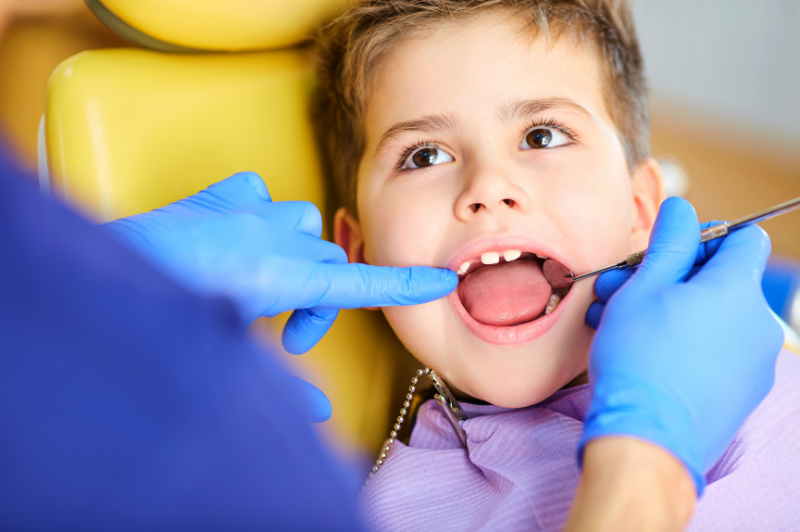





The first visit to the dentist


When should you visit the dentist for the first time with your child? Why shouldn't you wait until the teeth start to break or your little one starts to suffer from pain? What is the first visit to the dentist for, how does it go and how is it worth preparing your child for it? Read on to find out the current recommendations for dental care for young children.
For many parents and guardians, a child's first visit to the dentist is a big unknown. The internet is full of varied, often contradictory information about when to take their child to the dentist and whether it's even necessary before teething begins. In this article, based on the recommendations of the Polish Society of Pediatric Dentistry and sound medical knowledge , we will try to dispel any doubts about the first visit to the dentist.
When is the first visit to the dentist?
This question raises the most doubts among parents, and rightly so, because familiarizing a child with a dentist's office has a preventive dimension (caries prevention and education), but also a psychological one (counteracting the fear of visiting a dentist).
Expert advises
According to the recommendations of the Polish Society of Pediatric Dentistry, a child's first dental visit should take place between six and 12 months of age. This comes as a bit of a shock to many parents, as their children's teeth are just beginning to erupt at this stage. Until recently, in many homes and even dental offices, the question of when the first dental visit should be was answered unequivocally: when all the teeth had erupted (i.e., between two and three years of age).


However, modern dental recommendations clearly indicate that it's best to take your child to the dentist for the first time when the first tooth appears . Why so early?
Prevention and education: the main purpose of the first visit to the dentist
When a baby has the first, long-awaited tooth, the parents begin the stage of careful care not to be attacked by caries. Until now, it was enough to wash a child's gums twice a day with a gauze pad moistened with water or chamomile infusion.

With the eruption of the first baby tooth, a child's oral hygiene should undergo a significant change. This is precisely what the dentist informs parents about during their first dental visit. This first meeting with parents and their child has a clearly educational and preventative dimension and lays the foundation for:
- effective caries prevention;
- positive attitude of the child towards the dentist and general dental care.
First visit to the dentist: what to expect?
The dentist will look into the baby's mouth for a moment to assess the condition of the first tooth and the entire mouth. The rest of the visit is time to educate the parents (it is worth going with an accompanying person who will take care of the baby, while the parent talks to the dentist calmly). Here's what to expect when you see the dentist for the first time.
Hygiene
The dentist will advise you on the best way to care for your child's teeth to effectively prevent cavities. A toothbrush and toothpaste with the appropriate fluoride content should be used from the moment the first tooth appears. The dentist will provide expert advice on the best hygiene products to choose, how many times a day, and how to clean your child's mouth.
The enamel of milk teeth is much thinner than in the case of permanent teeth, which is why proper oral hygiene of a toddler is an absolute basis for a healthy, beautiful smile.
Diet and unfavorable habits in a baby
During your first visit to the dentist, you'll likely cover topics such as optimal nutrition for your teeth and the impact of certain habits on bite development. Your dentist will explain what baby bottle tooth decay is and how to prevent it, as well as which foods to avoid (including sticky snacks like crisps, breadsticks, and chewy treats, as well as sugary drinks – especially those served to your child at night!).
The dentist will advise on what to include in a toddler's diet to ensure optimal conditions for dental development , and will also educate parents on why they shouldn't lick their child's pacifier or spoon. The dentist will also discuss some habits that often contribute to malocclusion (including chronic pacifier or thumb sucking). For younger children, preventative measures may also include proper sleeping positioning (height of the pillow), proper feeding bottle positioning, and so on.
Stages of dental development in children
During the first meeting, the dentist will tell the parents of the baby about the order and approximate age at which the baby will start to develop new milk teeth. The dentist will also explain what, in the case of the dental condition and the general condition of the oral cavity, should arouse possible anxiety.
Positive associations
The worst thing that can happen to a child is postponing their first visit to the dentist until a toothache occurs . This can lead to a lasting fear of the dentist in your child, and consequently, a reluctance and resistance to subsequent visits to the office.
Regular visits with the child to the dentist - from the early months of life - help to build positive associations in the child and the habit of preventive, usually completely painless check-ups. Especially when they take place in child-friendly offices (you can read about it later in the text).
Subsequent visits to the dentist: how often?
From the first visit, we try to take our child to the dentist every 3-6 months for a checkup of their teeth and bite. Of course, if parents notice any worrying symptoms in their child, such as white or dark spots on baby teeth or significant delays in tooth eruption, it's worth seeing the dentist sooner.
As the old and very wise saying goes : prevention is better than cure. Daily dental hygiene at home, a proper diet, and regular visits to the dentist are the simplest, cheapest, and least painful way to ensure a beautiful, healthy smile in your child.
Recommended products


Senior specialist in the Department of Assessment and Cooperation Development, Institute of Mother and Child
How to prepare for the first visit to the dentist?
Since we already know when the first visit to the dentist's with a child should take place, let's take a look at proven methods to best prepare our child for it.

Take a moment to find the right specialist
Many dentists in Poland specialize in pediatric dentistry (pedodontics), ensuring a pleasant, cheerful and positive atmosphere in their offices. She will be favored by, for example, colorful medical clothes with images of fairy-tale characters, colorful drawings on the walls or syringes in housings resembling animals. Child-friendly equipment, combined with the appropriate dentist approach, can really work wonders, turning your first visit to the dentist into a fun adventure.
Read books to your toddler about oral hygiene and visits to the dentist
Talk to your child about what the dentist does and answer questions . While looking at pictures together and reading about other children's fairy tale experiences, your little one will have a chance to imagine what awaits them at the dentist in a safe, neutral environment.
With a slightly older child, you can also play dentist at home. Talk about magic mirrors that reveal every blemish on teeth and the fun "blower" the dentist uses to sweep unwanted guests out of their mouths. Make it fun for both of you – when the first dentist visit arrives, there will be nothing to be afraid of!
Don't convey your concerns to your child
Many adults have negative associations with the dentist's office, but it is not worth feeding a child with such emotions. Try to avoid questions and statements such as "Are you afraid?", "It sure won't hurt!" They will certainly make your little one suspect that the first visit to the dentist may not be very pleasant.
Bring your child's books and favorite toys
They will come in handy when you need to sit in the waiting room for a while. A beloved plush toy or doll will give your toddler courage - the dentist can also see the "teeth" of the cuddly toy first, and then the toddler. This will surely ease the tension in a child who is stressed out by the new situation.
On a daily basis, try not to scare your child with a dentist
Don't use statements like, "If you don't brush your teeth, they'll rot and we'll have to go to the dentist!" Your little one will start to associate "that scary person with toothache" as the ultimate evil to be feared. As we already know, visits to the dentist don't have to be scary or painful—if they happen regularly.
The key is prevention and once again prevention (combined with home hygiene and proper diet).
Take the time to celebrate your first dentist appointment
It's important that it happens without rushing , without deadlines, and in a calm atmosphere. When your little one leaves the office, you can reward them with a trip to their favorite playground, a visit to the zoo, or cooking their favorite meal together for dinner.
As a reward, try to avoid sweets – after all, proper eating habits are one of the basic elements of tooth decay prevention, right?
Prevention on the way to maintaining a healthy smile
Once your first dentist visit is behind you, you can be truly proud of yourself – it's one of the milestones on the path to maintaining healthy, beautiful teeth for your child . Follow your dentist's recommendations and visit regularly, so future visits won't be a problem for you.
Author