




Safe toys for a child: how to choose and what to pay attention to?

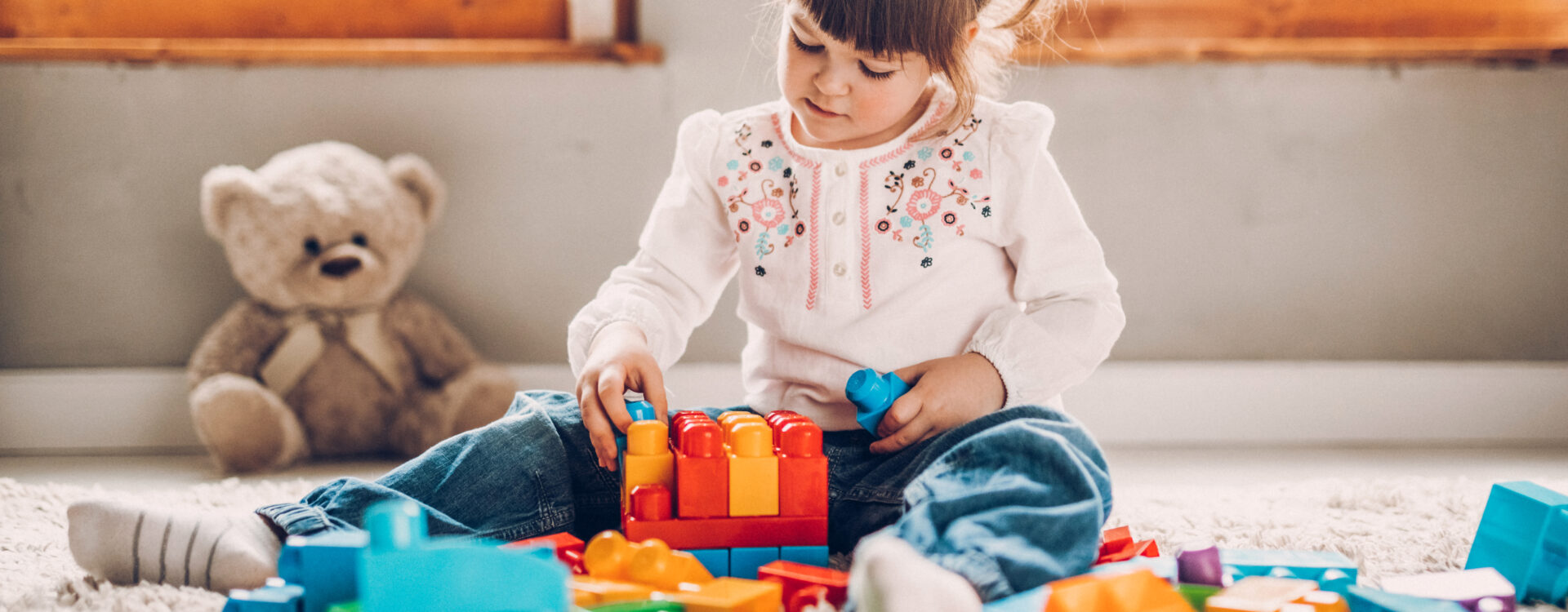
For a child to develop properly, they need toys that are appropriate for their age. They should not replace the time devoted by parents, but can help in developing curiosity, perceptiveness or simply motor skills of a little person. When shopping, remember that toys give children much more than just fun - they help them discover the world!
When choosing dolls, blocks, or games for our children, we're looking for something unique, attractive, and something they'll enjoy. We should consider our children's interests and preferences, as well as the value a given toy can bring to their lives. The ideal toy is one that brings joy to a child and helps them develop and acquire new skills . For this to happen, it should, above all, be age- appropriate . This is closely linked to their developmental abilities: cognitive, emotional, and directly related to skills at specific stages of development.
By offering a small child too ambitious toys intended for older children, you may miss the perception skills developed in the toddler. Too many elements, a very complex toy mechanism, too detailed pictures, unattractive colors, etc. are a set of features that will not only accelerate the development of a toddler, but also discourage him from playing. For example, when buying toy cars for babies, keep in mind that they should be in the form of a soft mascot, not a metal toy on wheels.
Safe toys for children - what should you pay attention to?
Check that the toy:
- it is adapted to the age of the child - appropriately marked (toy safety markings, eg Safe Toys), especially in the range 0-3, in which the manufacturer should specify the child's age (giving it in months of life);
- it is carefully made;
- it has the markings, eg EN71 certificate and others, about which we write in the text;
- the aforementioned markings are not intended to mislead buyers.

How to choose safe toys for children:
First, pay attention to the manufacturer's age rating on the packaging. If it matches your child's age, examine the toy and assess its safety . Look at the packaging and read the labels for information and markings. The symbols you'll find there may not mean much to you, so here's how to find out who guarantees that the products meet the requirements for safe toys for children , and on what basis.
Using simple toys as an example, we can demonstrate that depending on a child's age, a toy will be perceived as safe in different forms . We're talking about toy cars, for example. And in this case, when thinking about toy cars for babies, we certainly imagine a soft plush toy, free of small parts. However, when thinking about an older child, the choice of available toys increases – from dump trucks to various models of toy cars.
Expert advises
When buying safe toys for children, it is worth using stationary stores. Even the best product description in an online store will not replace a skilled and foreseeable parent's eye. Let's read the labels, look for age markings of the toy user, and rely on specialists who, when recommending a given product for children of the appropriate age, know their needs and development possibilities.

How to responsibly buy safe toys for children?
The best solution in this case would be to carefully inspect the toy you're considering purchasing. However, this isn't usually possible because they're sold pre-packaged. It's worth noting that, since 2011, amended Polish law has required manufacturers and importers to provide instructions and appropriate labeling. What should you look for on labels and how to read this information? Below, you'll find a few words about toy safety symbols.
Toy safety symbols
When shopping, it's very helpful to know the appropriate markings and symbols that manufacturers are legally required to display on products. This is especially important if you don't have the opportunity to touch and examine the toy in detail. Below, we explain why it's worth paying attention to certificates and markings such as Safe Toys or the EN71 certificate.
The most important symbols are:
- CE mark each toy sold within the European Union must bear this marking, and it is the manufacturer's declaration. Indicates the compliance of the product with European standards. You should be extremely careful with this sign, as it is often counterfeited.

- EN71 certificate - means compliance with European law. This mark is placed on products that have obtained EN71 certificate, issued by institutions independent of the manufacturer. In detail, EN71 certificate means compliance with the so-called standard. toy.

- FairTrade mark - it is awarded by organizations affiliated to Fairtrade Labeling Organizations International (FLO). It proves that the toy was produced with respect for employee rights.

- GOTS certificate - was created by the International Working Group on Global Organic Textile Standard. The GOTS certificate is a mark for a product that is made entirely of natural raw materials and textiles, and no pesticides or other toxic chemicals have been used in its production. When you buy a GOTS-certified product, you can be sure that it is made of natural materials that are safe for your health.

- Znak FSC - proves that the toy was made of wood obtained with respect for the natural environment. This certificate is issued by the international public benefit organization (Forest Stewardship Council®), committed to sustainable forest management. Together with the PEFC certificate, they mean that production takes place with care for the natural environment.

- Certificate PEFC - is awarded by The Program for Endorsement of Forest Certification. Among other things, it says that the toy was made of ecological wood. If we care about ecology, when shopping, it is worth paying attention to whether the toy or its packaging is PEFC-certified.

- Character 0-3 - crossed out: manufacturer's declaration that the toy is not suitable for a child under 3 years of age.

- GS mark - the abbreviation comes from the words "Geprüfte Sicherheit" (German: proven safety) and proves that the toy has been tested only in accredited testing laboratories. This certificate guarantees that the product meets the requirements of legal regulations and the manufacturer.

- Znak TUV GS - ensures that the product has been tested by the TÜV Rheinland laboratory and complies with the requirements of the GS marking.

- Znak Safe Toys - it is a safety certificate issued by an independent Testing and Certification Institute (Italy). By choosing a toy marked with Safe Toys, you can be sure that it has been assigned the correct age rating and verified for the presence of all chemical and microbiological hazards. As a parent, before buying a toy, be sure to pay attention to the information about the safety certificate issued by Safe Toys.

- Sign of the National Institute of Hygiene - informs that the product meets the hygiene requirements and standards applicable in Poland. It is not obligatory for producers, but it is especially welcome with products for children.

- ASTM F963 – an American toy safety standard applicable to the US market. It specifies detailed requirements regarding, among other things, the mechanical and physical properties of toys, their durability, and the presence and migration of selected chemical substances. This standard applies primarily to toys manufactured for the US market or imported from the US, but does not replace the CE marking, which is mandatory in the EU.
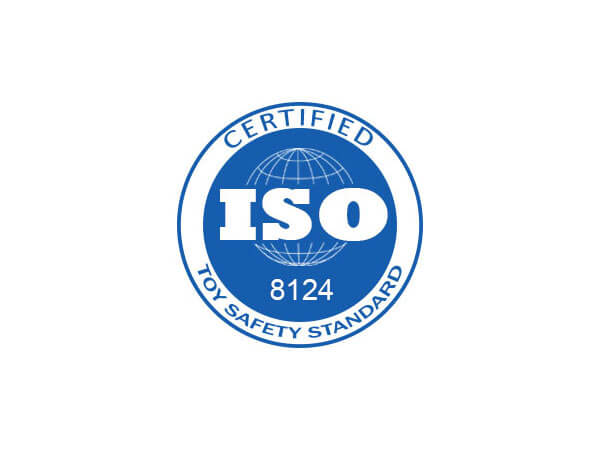
- ISO 8124 – an international toy safety standard used in many countries around the world. Its scope is similar to the European standard EN 71 and covers requirements for mechanical, physical, and chemical safety, among other things. Compliance with ISO 8124 may indicate that a toy is designed in accordance with global safety standards, although—as with ASTM F963—it does not relieve the manufacturer of the obligation to comply with EU law.
- The sign of the Institute of Mother and Child - informs that the toy has been thoroughly checked by a team of experts (specialists in developmental medicine, psychologists and educators) in terms of children's developmental safety. The opinion of the Institute confirms that the compliance with the standard declared by the manufacturer is actually true. By choosing a toy with the logo of the Positive Opinion of the Institute of Mother and Child, you can be sure that the origin of the raw materials, the production process, the non-toxicity of the dyes and materials used, the possibility of keeping clean, washing and disinfecting necessary for children's products were checked during the tests. Experts also thoroughly verified the quality and diligence of workmanship, and then conducted research on a group of users.

How do producers mislead the consumer?
The "CE" marking is mandatory on the packaging of all toys sold in the European Union , including Poland. Buyers have become accustomed to the idea that this is a manufacturer's certification of compliance with applicable regulations , including EU standards. The CE marking may be a manufacturer's declaration based on documents and tests attesting to the toy's safety, or a manufacturer's assurance that the product meets all legal requirements.
However, a similar "China Export" mark also appears on toys imported from China, which in no way meet applicable European standards and regulations. Therefore, caution is advised when searching for safe toys for children.
Safety symbols - how to distinguish?
It's worth noting the "China Export" mark, which has equal letters placed very close together . The mandatory "CE" for toys, on the other hand, has letters placed a certain distance apart . Also, note that in the letter "E" of the "CE" mark, the center bar is shorter than the others.

Little ones - special attention regarding toy safety symbols
Products often feature a graphic designation—a crossed-out 0-3—suggesting that the toy is not intended for children in that age range , but rather for those over three. When buying toys for young children, pay close attention to what you're choosing. The presence of the Safe Toys mark and other safety certifications is an additional plus.
Expert advises
The Institute's experts often consult toys that were questioned during a market inspection conducted by the Office of Competition and Consumers. Dishonest producers put a crossed mark 0-3 on them, despite the fact that the toy is intended for children from this group. In this way, they want to hide the poor quality of workmanship and the terrible design, thanks to which the product should absolutely not find its way into the hands of the youngest children. At first glance, you can see that the toy was created specifically for children from this age category, but due to the above, it can be very dangerous for them. An example can be rattles aimed at the youngest. There are products marked with a crossed-out 0-3 sign, because they have sharp edges or their parts are easily separated from each other. Such toys pose a risk to children and should be eliminated from the market.
Look for toys that don't contain small, detachable parts – there's a risk that a child might put a smaller part in their mouth while playing. Therefore, toy cars made of small metal, for example, can pose a risk to a toddler.
Be sure to check the toy's material and construction – if possible, run your hand over it to see if the edges are smooth and properly finished. Avoid any protruding or sharp details that could cause injury. If the toy is interactive, for example, it reacts when pressed, first check for any potential hazards: it's not too fast, won't scare your little one, and has a volume control.
Safe toys for the child
Young children's natural developmental needs include putting various objects in their mouths and biting them. Therefore, it's important to ensure that the manufacturer hasn't used harmful or easily washable materials. Of course, the manufacturer declares this as part of the CE marking. Packaging doesn't use a separate marking to identify the product as completely safe in this regard. However, given the intended similarity of the CE mark to the China Export mark, as discussed above, special attention should be paid to the materials from which the product is made.
Institutions recommending products for children
The Institute of Mother and Child thoroughly checks toys for this purpose. Those that receive our positive opinion are marked with a special logo . If you don't find it on the packaging, be alert to the toy's odors. An unpleasant, "chemical" smell should discourage you from purchasing. Avoid products with suspicious odors; they may be dangerous for your children.
Safe toys for babies
Toys for the youngest (especially those under 1 year old) should be easy to clean, wash, and disinfect. Plastic, wood, and metal are easy to wash with soap and water and dry. All stuffed animals and plush toys should be washed periodically using children's laundry detergent. Toys for older children can be periodically cleaned in the dishwasher without using chemicals.

Also, make sure toys do not have long strings and loops that could become wrapped around your child's neck. In the case of toys such as toy cars for babies - make sure that they do not consist of easily detachable elements. Nor can they be too loud or busy. More technologically advanced toys or even sports equipment for children (e.g. scooters, bicycles, etc.) should be accompanied by detailed instructions that may facilitate the safety assessment. Of course, you also need to be careful here, because the manual is not always available in Polish (although the manufacturer of the toy or equipment is obliged to do so).
If you notice that a toy you've purchased poses a risk, you can report it to the Trade Inspectorate or the Office of Competition and Consumer Protection . Regardless of your report, you can also return the toy to the store, as you have the right to do so.
Warning! You should never let a child play with packaging, as plastic bags, for example, pose a risk in themselves.
Conscious decision: safe toys for children
The old saying goes, "Prevention is better than cure." This applies equally well in this case. Follow the advice provided by the Institute's experts . Be sure to check what you're buying and feel confident that you've made every effort to choose the right toy in every respect. When choosing, also consider environmental and ecological considerations (choosing products with labels such as GOTS or PEFC certification will help).
Remember that the best solution is to participate in play with your child . Nothing can replace a responsible, attentive, and forward-thinking parent who can prevent a potential event with negative consequences for the child. Playing together and spending time together is an investment in fostering your child's curiosity, inquisitiveness, and analytical and synthetic skills, as well as drawing conclusions – essential at every stage of their life. It's worth remembering this.
Author


