





Child locator – when does it help, which one to choose and how to use it wisely?



When a child is playing on a large playground in the park, attending a fair or festival, or relaxing on a particularly crowded beach, parents can conjure up dozens of worst-case scenarios. It's no wonder, then, that a growing number of families are wondering whether a discreet child tracker is a good solution for everyday use and when traveling. On the one hand, tracker rankings tempt parents with the promise of increased security, but on the other, they raise important questions for parents about children's privacy, trust, and autonomy. In this article, we'll suggest which child tracker to choose, when using one might be worthwhile, and how to use it wisely to prevent worry from turning into excessive control.
Child locator – what is it and how does it work?
A child tracker is a device or app that helps determine a child's current location . It most often uses GPS, a technology based on satellite signals. Location information is then sent to an app on the parent's phone—usually via the cellular network, though some devices require a SIM card and an active data plan.
It's worth noting that this technology has its limitations – GPS satellite signals work best in open spaces, while indoors in shopping malls or densely built-up areas, their accuracy may be lower. In practice, this means that the tracker won't always show the child's position with the same accuracy. Therefore, many devices also use Wi-Fi or LBS, which rely on cellular network signals. Therefore, while location tracking isn't always perfectly accurate, it can still be helpful in many situations.
When might a child locator be useful?
A child tracker can be a helpful aid when a toddler or older child is in a crowd, in an unfamiliar place, or is beginning to navigate independently outside the home. Parents most often consider this solution in situations such as:
- foreign holidays and stay in a large hotel or resort,
- crowded beach, festival, open-air concert or amusement park,
- school trip, summer camp or day camp,
- independent way to school or for extra-curricular activities,
- the older child returns after dark, e.g. from training or meeting with peers.
In such situations, a child locator can increase the sense of security and facilitate a quick response if the child wanders off, gets lost or needs help.
Types of children's trackers: what are most often found in the rankings?
When looking through many industry rankings, we will quickly notice that children's locators are divided into several main categories:
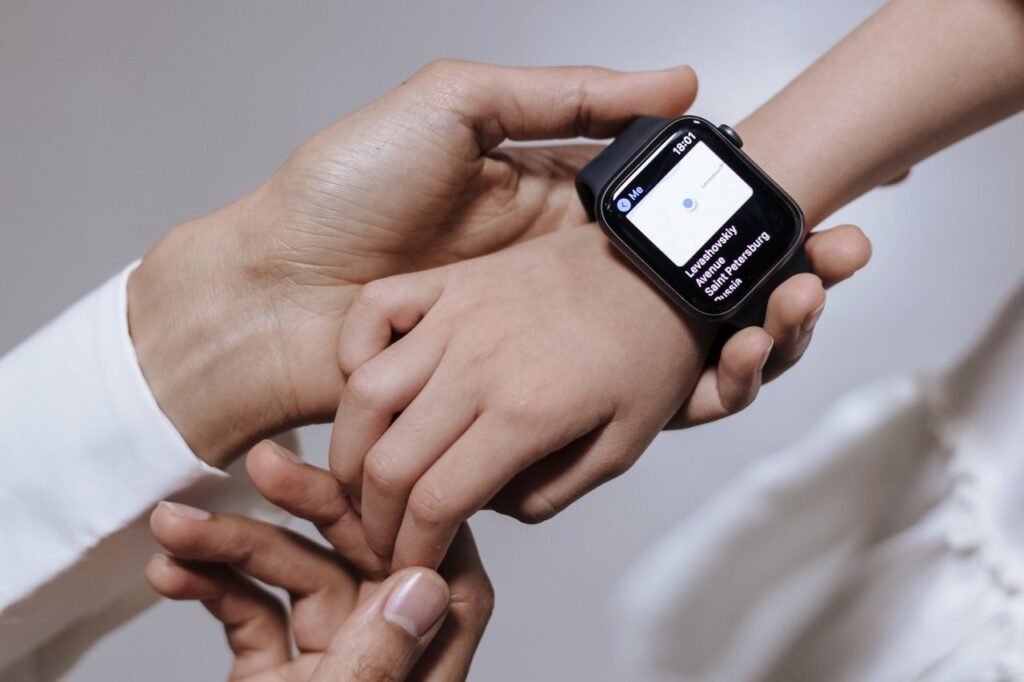
- Smartwatches with GPS
These colorful watches combine a child locator with a phone. They allow for two-way voice calls and have an SOS button that children can press in case of emergency.
- Mobile applications
Perfect for teenagers who are usually never without their smartphones, location-aware apps run in the background, providing parents with the location of their child's phone. However, it's important to remember that the effectiveness of such a solution depends on factors such as battery charge, internet access, and privacy settings.
- Portable modules and keychains
If you're looking for a discreet tracker for your child, online rankings are dominated by small devices like AirTags. They can be hidden in a backpack, sewn into a jacket, attached to keys, or attached to your little one's shoe using silicone adapters (e.g., shoelaces or insoles), or you can wear a discreet tracker in the form of a small, silicone bracelet.
It's worth noting, however, that not every such device works like a traditional GPS. Some small trackers operate using Bluetooth, so they tend to perform better at shorter distances or where they can "catch" the signal of other devices on the same network. Their advantages include small size and long battery life, but it's important to thoroughly investigate the actual capabilities of a given model before purchasing.
Which child tracker should you choose? The most important criteria
Now that we know that children's trackers come in various forms and operate on slightly different principles, another important question arises: which child tracker should you choose that truly meets the needs of your child and the entire family? When making a purchase, don't rely solely on advertising, fashion, or the manufacturer's promise that a given tracker model is "the best." Much more important is whether the device is appropriate for the child's age, the everyday situations in which it will be used, and whether the child will even want to wear it . So what should you look for when browsing child tracker rankings?
The age of the child
This is one of the most important criteria. A different solution will work for a toddler who easily wanders off on the playground, while another will work for an older child who is beginning to move more independently. The younger the child, the more important it is for ease of use, a small device, and comfort of carrying.
Wearing style and comfort
A tracker should be comfortable enough that the child won't want to take it off immediately. Some children will prefer a watch, while others will prefer a lightweight module clipped to a backpack or clothing. In practice, even the best tracker for a child won't be effective if it's too heavy, uncomfortable, or gets in the way during play.
Location accuracy
It's worth checking the accuracy of a given device and the conditions in which it works best. This is especially important if the locator will be used not only outdoors, but also, for example, during vacations, in large buildings (e.g., shopping malls), or in crowded places.
Battery
The operating time of a tracker on a single charge is crucial for everyday use. A device that requires constant charging may simply prove impractical, especially during trips or vacations.
SOS button
For many parents, this is one of the most important features. It allows a child to quickly call for help or contact a caregiver in a stressful or dangerous situation.
Geozones
Some devices allow you to set a safe area, such as around the home, school, or playground. Parents receive a notification when a child leaves the area. This is a useful feature, but it should be considered an additional support system, not a replacement for parental vigilance and conversations with children about safety issues outside the home.
Water resistance and everyday use
Children don't always remember to take off their watches before washing their hands, playing in the garden, or going out in the rain. Therefore, it's a good idea to check whether the tracker is splash-proof, moisture-proof, and resistant to heavy use.
SIM card, subscription and costs
Before purchasing, it's worth checking whether a child tracker requires a SIM card, an active data plan, or an additional monthly fee. This is important because a seemingly inexpensive model may generate ongoing costs in the future.
Discretion
Expert advises
It's worth emphasizing that "discreet" shouldn't mean secretly hiding the tracker in a child's backpack or clothing without their knowledge. In this case, it's more about comfort – the best tracker for a child is one that doesn't interfere with play and daily activities, doesn't attract unnecessary attention from others (peers, third parties), and at the same time remains a practical aid in situations where parents want to ensure their child's safety outside the home.


The best child locator – is there one perfect model?
Many parents are searching for a specific answer: what's the best child tracker? They browse model comparisons, user reviews, and online rankings. The problem is, there's no single model that's perfect for all children and all families . What works well for a preschooler on vacation may not be the best solution for an older child's everyday use.
Expert advises
If we want to choose the best tracker for a child, it's worth involving them in the process, depending on their age and maturity. Discussing which model would be most convenient for them, in what situations a tracker might be useful, and whether peers use similar solutions can provide parents with valuable guidance when choosing a specific model. Of course, the final decision on which tracker to choose for a child rests with the caregiver, but engaging the child helps to familiarize themselves with the topic and better understand their needs.
Child locator – how to reconcile safety with autonomy and trust?
A child tracker shouldn't be a tool for unilateral parental control , but a solution that enhances the sense of security of both parent and child. Using it in potentially stressful or risky situations is one thing, but constantly checking the location without considering the child's age, needs, or right to privacy is quite another. If the device is intended solely for monitoring, it can undermine trust and hinder the child's gradual development of independence.
In this article we write more about how excessive care can affect a child's development.
While you might sometimes hear that "we didn't even have cell phones as children, and yet we grew up to be human beings and nothing happened to us ," it's worth remembering that the modern world is different than it was in our childhood. Family lifestyles, the pace of daily life, and the scale of travel have all changed. The dangers children face outside the home have also changed somewhat. Moreover, in some situations, the child themselves may see the benefits of using a discreet locator, for example, when a teenager often returns from training in the evenings and, despite being close to home, wants to feel confident that they can quickly contact a parent or call for help if necessary.
This does not mean, however, that new technology should take away a child's autonomy.
Common rules instead of hidden control
Expert advises
Therefore, considering which tracker to choose for a child is a good time to discuss privacy, autonomy, and the limits of tracking – for example, when a tracker should be used for safety purposes rather than for everyday parental control. It can even be helpful to write down a "tracker usage code" together, in which the parent and child clearly define when the tracker should be taken with them, when the child accepts checking their location, and when they would prefer more privacy (of course, appropriate to the child's age, but with full respect for their autonomy and privacy).
The best child locator – a safety aid, not a trust replacement
The best child tracker isn't one that allows parents to monitor their child's every move, but one that truly supports safety in specific situations and is tailored to the child's age, needs, and maturity . Even if an online ranking suggests which model to choose, the value of a device is determined not only by the technology but also by how the family uses it.
A well-chosen, discreet child tracker can provide peace of mind for both parties, but it shouldn't deprive the young person of their sense of agency, privacy, or right to gradual independence. Ultimately, it's not the tracker itself that ensures a child's safety, but a wise combination of care, conversation, clear rules, and mutual trust.
Medical consultation