





Why does a baby sleep with its mouth open? When is it normal and when is it a cause for concern?


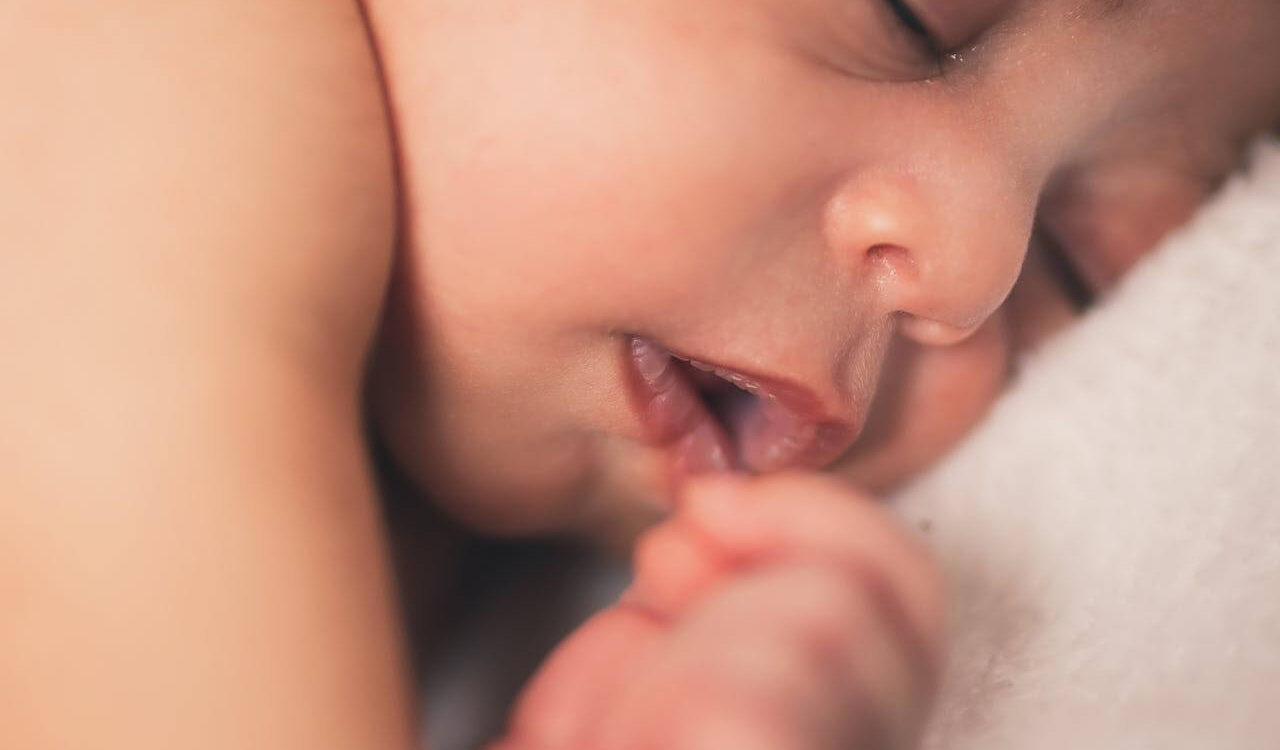
Do you look at a baby sleeping with their mouth open and wonder if it's just a cute sight or a sign of potential problems? If a newborn or infant regularly sleeps with their mouth open and also holds it open during the day, it may indicate an issue that requires consultation with a specialist. This also applies if the baby sleeps with their mouth open but breathes through their nose, as their lips should remain slightly closed at rest.
In this article, we explain why babies sleep with their mouths open, what is still normal? What consequences can a persistent habit of sleeping with their mouths open have, and how to help your child return to natural, healthy breathing patterns step by step.
Nose breathing and an open mouth in a child – why is proper breathing so important?
Wondering why a baby sleeps with its mouth open, and whether this breathing pattern should be a cause for concern, considering that breathing is an automatic process? The key lies in the fundamental role of the nose – nasal breathing constitutes the correct, physiological respiratory pathway at rest . The nose is a specialized organ, optimally adapted to taking in air:
- filters the air,
- warms and moisturizes them,
- activates the diaphragm,
- improves oxygenation by releasing nitric oxide.
Expert advises
Equally important, proper breathing is crucial for a young, developing organism. It influences, among other things, the development of proper facial muscle tone, occlusal alignment, and the harmonious development of craniofacial structures. All of these elements influence not only pre-verbal functions but also the final appearance of the face.


Therefore, when the breathing pattern at rest is disturbed and the infant constantly sleeps with its mouth open, the consequences of such a condition usually develop slowly and almost imperceptibly - but over time they may turn out to be important for the functioning and development of the child.
Open mouth with a blocked nose – why does a child sleep with its mouth open but breathes through its nose?
Many parents find comfort in observing their baby sleeping with their mouth open but breathing through their nose. Since air flows freely through the nose, there seems to be no cause for concern . However, an open mouth with a clear airway indicates a lack of proper resting pattern . This means that, despite normal breathing patterns, the body is unable to close the lips at rest – which explains why babies sleep with their mouth open even though they breathe through their nose.
Expert advises
At rest, the lips should be slightly closed thanks to the proper functioning of the orbicularis oris muscle, while the tongue should remain raised and resting on the palate in a horizontal-vertical position, the physiological resting position. If the tongue sinks to the floor of the mouth or rests on the lower gums, this contributes to the mouth opening being slightly open – even if the respiratory tract is normal and the child breathes through the nose. This occurs because a low tongue position does not provide the jaw with the stabilization needed to maintain a full lip closure at rest. Therefore, if a child regularly sleeps with their mouth open but breathes through their nose, it is worth consulting a specialist, as over time, an abnormal "open mouth" pattern can worsen and affect the development of oral and facial functions, muscle tone, the formation of lip occlusion, and the resting position of the tongue.
Why does a 6-week-old baby sleep with his mouth open? Common causes
If you notice your newborn sleeping with their mouth open from the very first days of life, or your 6-week-old sleeps with their mouth open almost every night, it's worth determining the underlying cause of this pattern. This will determine your course of action, so the first step is always to answer the question: why does your baby sleep with their mouth open? When a baby regularly sleeps with their mouth open, it's not just a matter of habit —it could be due to anatomical or stress disorders, or a persistent pattern of mouth breathing (which is always abnormal).
The most common biological and anatomical obstacles that cause an infant to sleep with its mouth open
Organic causes that prevent proper nasal breathing and cause an infant, e.g. a 6-week-old baby, to sleep with his mouth open include:
- obstructions in the nasopharynx, such as chronic swelling of the mucous membrane, infections, retained secretions, or, less frequently in such young children, hypertrophy of the pharyngeal tonsil (the third adenoid). Each of these situations can reduce the space in the nasopharynx and impede airflow;
- anatomical defects of the nose or its dysfunctions, e.g. septum deviation, narrow nasal passages, polyps (although they are very rare in infants), chronic swelling of the mucous membrane, inflammation or dysfunction of the Eustachian tube, which may affect nasal patency and breathing comfort;
- shortened frenulum of the tongue (ankyloglossia), which limits the tongue's elevation towards the palate and promotes a low resting position of the tongue. As a result, the jaw is less stabilized and the mouth remains open more often, which the baby sleeps with its mouth open, but he breathes through his nose.

Abnormal muscle tone and habits that explain why babies sleep with their mouths open.
Another common reason why a baby sleeps with its mouth open is problems with muscle tone – especially its distribution – and established patterns of oral function :
- abnormal muscle tone both reduced muscle tone (hypotonia), which weakens the stabilization of the jaw and promotes a low resting position of the tongue, and consequently causes breathing through the oral tract, as well as increased muscle tension (hypertonia), e.g. in the neck, shoulder girdle or orofacial area, which may disturb the coordination of breathing, swallowing and tongue position, and may also result in asymmetry or incorrect distribution of muscle tone in the child's body;
- persistent orofacial patterns due to recurrent infections or inhalant allergieswhich cause chronic nasal obstruction; after a cold, the habit of breathing through the mouth often remains and therefore the baby sleeps with its mouth open, even though the nose is already clear;
- persistent parafunctions, such as prolonged sucking on a pacifier, bottle, thumb or cloth diaper/plush toy, which disturb the development of dental arches and deepen the incorrect breathing pattern.
Possible consequences of a 6-week-old baby constantly sleeping with his mouth open – why shouldn't you wait to see a specialist?
A persistent pattern of oral breathing at rest disrupts the proper development of bone structures . A tongue that, instead of resting on the palate, remains low on the floor of the mouth does not stimulate the jawbone to grow properly and widely.
As a result, in children whose infantile "open mouth" persists for a long time, the palate may narrow and arch upwards.
This, in turn, contributes to facial deformities —typical of the so-called adenoid face, characterized by elongation and narrowing of the lower part of the face—as well as the development of malocclusions (overbite, open bite, crowded teeth). A lowered resting position of the tongue is also one of the main pathways leading to speech defects —especially interdental lisping. When a newborn sleeps with his mouth open from the first weeks of life, these difficulties are more likely to become permanent and worsen over time.
Sleep and General Health Problems – What Happens When a 6-Week-Old Baby Sleeps with His Mouth Open?
When a child sleeps with their mouth open, breathing through their mouth, the air reaching their respiratory tract is cold, unclean, and full of pathogens . Experts compare this to letting frost into the house through an open window instead of through the vestibule – the difference for the body is enormous. In this situation, susceptibility to infections increases , and dry oral mucosa promotes gingivitis and tooth decay as soon as the first baby teeth appear.
Expert advises
The most serious consequence of a newborn or infant sleeping with their mouth open is a decrease in sleep quality. Whether a child sleeps with their mouth open but continues to breathe through their nose, or breathes through their mouth, sleep can be shallower, more interrupted, and less restorative. Microarousals are more frequent, and in cases of mouth breathing or nasal obstruction, apnea episodes may also occur. Such sleep disruptions can lead to periodic hypoxia (insufficient oxygen), which in young children translates into increased irritability, difficulty regulating attention, poorer concentration, and reduced energy for play and exploration. Chronic sleep disturbances at this early age can also impact a child's overall development—cognitive, emotional, and motor.
Additionally, an infant sleeping with its mouth open often drools excessively , which is due to the weakened function of the orofacial muscles and the lack of full closure of the mouth.
How to help a child who sleeps with his mouth open?
If you notice your child regularly sleeping with their mouth open, don't wait for the situation to improve . The sooner you respond, the easier it is to determine why your baby is sleeping with their mouth open and how to restore normal breathing patterns. Even if your child sleeps with their mouth open but breathes through their nose, a thorough, interdisciplinary assessment is necessary – it allows you to determine the source of the problem and implement appropriate measures.
Interdisciplinary diagnostics – the first step when an infant sleeps with his mouth open
Proper diagnosis should involve the collaboration of several specialists . Each specialist assesses a different area of the child's functioning, and only by combining all the information can a complete picture be obtained as to why the child sleeps with their mouth open.
1. Otolaryngologist (or pediatrician) – assessment of anatomical causes and airway patency
The specialist primarily assesses nasal patency, the structure of the nasal cavity, the size of the palatine tonsils, and the adenoid (also known as the third tonsil). Depending on the need, they may perform a nasofiberoscopy, which allows for a detailed examination of the nasopharynx. If the cause of the open mouth during sleep is an anatomical obstruction or another ENT problem, removing it often breaks the vicious cycle that leads to an infant (or older child) sleeping with their mouth open.
2. Speech therapist/neurological therapist – a key expert to consult when a child sleeps with their mouth open, even when breathing through their nose
The specialist conducts a thorough interview and assesses oral and facial function, including muscle tone, symmetry and tone distribution, articulation structure (including the frenulum of the lips and tongue), as well as the resting position of the tongue, lips, and jaw. This allows them to determine why the infant sleeps with their mouth open. A speech therapist or neurologopedic specialist plans and conducts myofunctional therapy, which helps restore proper tongue position, improve lip function, improve oral closure, and correct any abnormal breathing patterns that may have developed in the infant.
3. Physiotherapist / osteopath – support when a 6-week-old baby sleeps with his mouth open due to muscle tone disorders
If the source of the difficulty is reduced or improperly distributed muscle tone, asymmetry, increased tension in the neck or chest, or postural disorders, a physiotherapist or osteopath can help restore the proper functioning of the tissues and myofascial system. This is crucial for jaw stabilization, proper tongue function, and proper breathing—especially when a child sleeps with their mouth open but breathes through their nose.

4. Allergist / orthodontist – when the child's open mouth is due to allergies
An allergist diagnoses inhalant allergies and chronic inflammation of the nasal mucosa, which can lead to nasal obstruction and cause an infant or older child to sleep with their mouth open.
5. Orthodontist – a key specialist in assessing the impact of mouth breathing on the development of the bite
The orthodontist assesses how chronic mouth breathing and a low tongue resting position affect the development of the maxilla, mandible, and occlusal relationships. It's not malocclusions that cause a child to sleep with their mouth open—on the contrary: prolonged mouth breathing, a low tongue position, and a lack of lip closure contribute to the development of malocclusions such as underbite, open bite, or maxillary narrowing. The orthodontist also assesses the width and shape of the palate, the alignment of the dental arches, and the symmetry of the facial skeleton. This allows them to determine whether early orthodontic support or preventative measures are necessary, especially if an older child has been sleeping with their mouth open for a long time.
Myofunctional therapy – effective when an infant sleeps with its mouth open?
After determining why the infant sleeps with its mouth open, the speech therapist implements myofunctional therapy, which aims to restore normal breathing patterns, tongue positioning, and lip closure.
Expert advises
This is a key element of support both when an infant sleeps with their mouth open daily and when the child sleeps with their mouth open but breathes through their nose – because even with normal nasal passage, an open mouth is still an abnormal resting pattern and requires correction. Myofunctional therapy also helps eliminate unfavorable habits that can develop in the first weeks of life – for example, when a newborn sleeps with their mouth open from birth. Early intervention supports the proper development of orofacial functions and prevents the entrenchment of patterns that lead to breathing, feeding, and speech problems. Therapy includes:
-
Appropriate positioning
Establishing proper head, neck, and torso positioning supports proper muscle tone, jaw stabilization, and a free nasal passage. Correct positioning is essential, especially for the youngest infants.
-
Mystery of the past
Exercises that strengthen the lips, jaw, and tongue are essential for maintaining a closed mouth and a stable tongue position. This is especially important when an infant sleeps with its mouth open and has difficulty closing its lips during the day.
Expert advises
For such young children (newborns and younger infants), this work is based primarily on passive exercises, i.e., gentle manual techniques and massages performed by a therapist or a properly trained parent. These massages improve muscle tone, support the function of the orbicularis oris muscles, stabilize the jaw, and prepare the child for a gradual transition to more active movement patterns.
-
Learning the correct tongue resting position
Working on verticalization and keeping the tongue in a horizontal-vertical position, on the palate, helps eliminate the pattern in which the child sleeps with its mouth open because the tongue falls to the floor of the mouth and does not stabilize the jaw. This element of therapy is also used in the youngest patients - especially when parents notice early on that the newborn sleeps with its mouth open from the first weeks of life.
-
Keeping your nose clear
Regular nasal cleansing with saline solution or seawater—especially before bedtime—supports maintaining a healthy nasal passage. This is especially important in children who, despite having a clear airway, maintain an open-mouth pattern—a situation in which the child sleeps with their mouth open but breathes through their nose. Ensuring a free flow of air through the nose helps stabilize the habit of nasal breathing and limits compensatory mouth opening.
-
Orofacial stimulation through appropriate selection of food consistency
Introducing foods that require biting and chewing strengthens the facial muscles and articulation apparatus. This is a natural way to support mouth closure in children whose mouths sleep open or are often open during the day.
-
Limiting pacifiers and parafunction
Avoiding prolonged sucking on a pacifier or bottle (after the age of one) helps prevent the development of an open-mouth habit and promotes proper tongue positioning – which is crucial, especially if a child sleeps with their mouth open out of habit. If a pacifier is used, it's important that its shape minimizes the natural positioning of the tongue and lips and doesn't interfere with the development of proper oral function.
-
Taking care of your baby's sleep environment - why is it important when a 6-week-old baby sleeps with his mouth open?
In the therapy process, it is extremely important not only to determine why the infant sleeps with its mouth open, but also to ensure optimal sleep conditions.
Expert advises
Correct body position at night supports stable, resting muscle tone and reduces the risk of infants sleeping with their mouth open, as the jaw drops during sleep. The most important element is a flat, firm, and stable sleeping surface – consistent with safe sleep principles. Such a mattress allows for proper head, neck, and spine alignment, which is especially important both when the child sleeps with their mouth open but breathes through their nose, and when the baby is just learning to close their mouth thanks to myofunctional therapy.
A well-chosen mattress that supports the natural curves of the spine can be an important element of daily prevention and sleep comfort. It's worth choosing products with proven quality and safe construction, such as the Rucken & FzjoMommy mattress models, which have received positive reviews from the Institute of Mother and Child.
Recommended products


Sensory Integration Therapist, Physiotherapist at the Therapeutic Rehabilitation Department, Institute of Mother and Child
Pillows are not recommended, especially for infants , even if their age theoretically allows for their introduction. Pillows can disrupt the head and jaw position, further contributing to keeping the mouth open. For children with reflux or an increased need to regulate breathing, only solutions recommended by a doctor should be used (e.g., specialized clinical positioning for selected medical indications). Parents should not raise the mattress with pads or wedges themselves.
It is worth remembering that working on a fixed pattern of mouth breathing requires patience and systematicity - it is a process, not a one-time change.
Why Does a Baby Sleep With Their Mouth Open? Key Lessons for Parents
An open mouth in a child isn't just a matter of appearance —it's often the first sign that craniofacial development, sleep quality, and proper oxygenation may be disrupted . Therefore, if you notice an infant regularly sleeping with their mouth open, or an older child habitually sleeping with their mouth open, it's important to intervene immediately . Early consultation with a speech therapist, otolaryngologist, or physiotherapist is also necessary if a child sleeps with their mouth open but breathes through their nose. This pattern, while less alarming, can easily become entrenched and leads to an incorrect tongue resting position, poor lip closure, and changes in occlusion and oral-facial function.
A quick response is an investment in the child's healthy development – stable bite, correct speech, effective sleep and proper breathing.
With accurate diagnosis and appropriate therapy, you can help your child return to their natural pattern: closed mouth and nasal breathing , both during the day and at night – regardless of whether the problem appeared in early infancy or gradually developed over the following months of life.
Medical consultation