





Hippotherapy: what is it, who is it recommended for and how can it support a child's development?


The term "hippotherapy" can sound mysterious, especially if a parent encounters it for the first time, seeking activities that support their child's motor, emotional, or social development. What exactly is hippotherapy, what does therapeutic contact with a horse involve, and who can benefit from this form of therapy? In this article, we explain when it's worth considering hippotherapy for children, its importance in working with children on the autism spectrum, and what determines the price of classes. You'll also learn why a horse in therapy isn't an "additional attraction," but an important element in working on a child's body, balance, communication, and sense of security.
What is hippotherapy and why does contact with a horse have such great therapeutic potential?
Hippotherapy is a specialized, multi-profile rehabilitation method in which a properly prepared horse becomes an integral part of the therapeutic process. When considering hippotherapy, it's crucial to understand that it's not simply horseback riding instruction, but rather a targeted medical-therapeutic approach aimed at improving a person's physical, emotional, cognitive, and social functioning.
Classes should be conducted by a qualified therapist and take place after medical qualification, in accordance with the recommendations of a doctor or therapist, because hippotherapy must be tailored to the needs, capabilities and possible contraindications of a specific child.
Hippotherapy: what is the phenomenon of this method?
To understand hippotherapy, we must first examine the movement of the horse at a walk. This mechanism affects the patient on several levels:
- Gait pattern coding: The rhythmic movement of the horse's back transfers a pattern to the child's pelvis similar to that which occurs during normal human gait. This provides the body with valuable motor stimuli—especially important for children who struggle with independent movement, postural control, or muscle tone.
- Movement in three planes: While on horseback, the body is subjected to rhythmic vibrations up and down, side to side, and front to back. This three-dimensionality stimulates the core muscles and helps develop balance, coordination, and body awareness.
- The influence of the horse's body temperature on the rider's body – what is it? A horse's body temperature is slightly higher than that of a human. Combined with rhythmic rocking, this can help relax overly tense muscles, which is why hippotherapy is often used as a rehabilitation tool for children with muscle tone disorders.
- Sensory stimulation: Contact with a horse provides numerous sensory stimuli: tactile, auditory, visual, proprioceptive, and even olfactory. Therefore, when answering the question of what hippotherapy involves, in addition to the physical exercises, one cannot ignore the multifaceted impact on almost all of the child's senses.
Hippotherapy as an element of therapy - why is a doctor's consent required?
Now that we know what hippotherapy is, it is worth emphasizing that classes should be carried out based on a referral or recommendations from a doctor.
Expert advises
Hippotherapy is considered a targeted therapeutic intervention that can complement primary treatment and rehabilitation, and therefore cannot be used without the consent of the patient's physician. Furthermore, there are a number of absolute and relative contraindications to this form of therapy (including cervical vertebral instability, hip joint dislocations, certain vision defects, drug-resistant epilepsy, or unhealed wounds), and the physician must rule out the risk of deterioration of the patient's health. The hippotherapist determines the program and goals of the sessions based on the medical diagnosis and in collaboration with other specialists caring for the patient, such as physiotherapists, psychologists, and educators.


Different forms of hippotherapy - it's not always just about sitting in the saddle
Depending on the patient's needs, hippotherapy can take various forms, tailored to the child's specific developmental, functional, or emotional challenges . What does it involve in practice? Hippotherapy sessions often combine several areas of work described below, but for a given child, one form may be particularly important—depending on the diagnosis, therapy goal, age, fitness level, and individual response to contact with a horse.
Physiotherapy on horseback
It focuses primarily on improving movement and is most often conducted by a physiotherapist certified in hippotherapy. Its goals may include improving trunk control, balance, coordination, muscle tone, and body awareness.
Psychopedagogical horse riding
It uses contact with a horse to support cognitive development, speech, concentration and social skills , which is why it often appears in the context of questions about hippotherapy and autism, or as one of the forms of therapy, for example, for children with intellectual disabilities.
Horse therapy – what is this form of hippotherapy?
In this aspect of hippotherapy, the most important aspect is the patient's emotional relationship with the animal . Mounting the horse itself is not a prerequisite; the goal is to alleviate fear, touch, observe the horse, learn predictable rituals, and gradually build a sense of security.
Expert advises
Well-conducted hippotherapy combines elements of physical rehabilitation, sensory therapy, emotional support, and communication development. For many children, horseback riding isn't a demanding chore, but rather an experience filled with curiosity, agency, and joy. This is why the question "what is hippotherapy?" should be understood more broadly: not just as a description of motor exercises on horseback, but as a planned therapeutic process in which movement, warmth, rhythm, contact with the animal, and the relationship with the therapist create an environment that holistically supports the child's development.
Hippotherapy – who is it particularly recommended for?
Parents often ask who can benefit from hippotherapy and what developmental challenges might warrant consideration. Simply put, hippotherapy can be helpful for children with motor, neurological, sensory, emotional, or social disorders , and contact with the horse and the movement of its back can support rehabilitation goals. However, the final decision always rests with the doctor and therapeutic team , as the indication for therapy is not the diagnosis itself, but the child's specific condition, abilities, needs, and safety. For whom is hippotherapy a particularly recommended therapeutic method?
Hippotherapy for children with cerebral palsy
It can support learning head and trunk control, improving balance , and developing more correct movement patterns . The horse's rhythmic movement transfers to the child's pelvis and trunk a movement pattern similar to that occurring during normal human gait. As a result, hippotherapy can support work on postural control, balance, and muscle tone regulation, especially in children who struggle with independent movement.
Hippotherapy for children with Down syndrome
It can support core stabilization , which translates to improved trunk, pelvic, and shoulder girdle control . This is crucial because many children with Down syndrome experience decreased muscle tone and increased ligament laxity, which can make it difficult to maintain proper posture, balance, and precise movement coordination. The horse's rhythmic movement stimulates postural muscles to actively work, making hippotherapy a valuable complement to therapy focused on improving a child's fitness, motor independence, and more confident functioning in daily activities . Furthermore, contact with a horse promotes concentration, motivation to cooperate, and natural social interaction.

Hippotherapy for children with autism spectrum disorder
It can support sensory regulation, communication, and relationship building . This is why the term "autism hippotherapy" often appears in searches by parents seeking therapy that engages their child through movement, touch, rhythm, and predictable contact with an animal. For some children with autism, a horse becomes a safe "bridge" between the child and the therapist : it helps reduce tension, increase cooperation, practice taking turns, respond to simple commands, and gradually develop social skills.
Expert advises
It's important to remember, however, that a diagnosis of autism spectrum disorder alone doesn't guarantee that hippotherapy will be an appropriate form of support for a specific child. The child's individual needs, sensory profile, anxiety level, communication abilities, health status, and specific therapeutic goals will determine eligibility. For one child, the most important focus will be on stress regulation and stimuli tolerance, while for another, it will be on communication, concentration, movement planning, or relationship building.
If a child has a strong aversion to the smell of a stable, the touch of a horse's fur, the movement of the horse, the sounds of the surroundings, or the mere proximity of a large animal, therapy can begin with very gentle familiarization: observing the horse from a distance, briefly entering the stable, touching a brush, giving a treat , or simple grooming activities without having to mount the horse. Sometimes, however, after carefully observing a child on the autism spectrum, the therapist may decide that hippotherapy is not the best form of support at a given stage.
Hippotherapy for children with intellectual disabilities
It can support concentration, understanding simple commands, communication, and a sense of agency . If a parent is wondering who might benefit from hippotherapy, this group of children is often among the recommended groups—especially when the goal of therapy is learning through action, movement, and relationships.
Horseback riding sessions typically have a consistent, predictable structure: the child learns the sequence of activities, how to respond to messages, how to cooperate with the therapist, and how to adapt their behavior to the situation. In this case, hippotherapy combines motor, cognitive, and emotional stimuli, so the child not only "performs exercises" but also learns through experience: through contact with the horse, their own body, and another person.
Hippotherapy for children with postural defects and selected orthopedic problems
It can be a supporting element in working on trunk stabilization, pelvic control, muscle balance, coordination, and body awareness . In practice, when explaining hippotherapy to this group of patients, we primarily refer to the rhythmic activation of postural muscles and learning to better control body position. This applies, among other things, to certain postural defects and milder scoliosis, but only when the doctor deems this form of therapy safe for the child.
It is worth emphasizing that hippotherapy does not replace individual orthopedic physiotherapy or exercises recommended by a specialist - but it can be a valuable supplement to them if the purpose of the classes is clearly defined.
Hippotherapy for children with sensory integration disorders
It can help you better perceive, organize and regulate stimuli coming from your body and the environment.
Expert advises
The horse provides the child with a wealth of sensory information simultaneously: profundity, movement, touch, sound, sight, smell, and changes in body position in space. Importantly, however, these stimuli appear in a rhythmic, repetitive, and gradable manner, and this clearly illustrates the importance of hippotherapy in therapeutic practice. Therefore, hippotherapy is often considered for children who have difficulties regulating arousal, planning movement, coordination, spatial orientation, or responding appropriately to sensory stimuli.
Hippotherapy for children with visual or hearing impairments
It can support spatial orientation, balance, nonverbal communication , and a sense of security during movement . For blind and visually impaired children, contact with horses helps develop awareness of body position, balance reactions, and confidence in their own movement abilities.
For deaf or hard-of-hearing children , hippotherapy can enhance communication based on gesture, touch, observation, rhythm , and predictable cooperation with the therapist. This is another example of how hippotherapy can be helpful not only in terms of motor skills but also in communication and emotional aspects.
Hippotherapy for children with emotional or anxiety difficulties
It can be helpful when the goal of therapy is to build a sense of security, reduce tension, and strengthen self-confidence . Contact with a horse requires mindfulness, gentleness, patience, and gradual familiarization with new stimuli, so for many children it provides an opportunity to practice self-regulation in a natural setting.
If a child withdraws quickly, has difficulty entering into relationships, or reacts strongly to change, hippotherapy can be a gentle way to build contact – first with the animal, and then also with the therapist and the environment.
Hippotherapy for adults
Although this article focuses primarily on children, it's worth noting that hippotherapy is also used in adults—for example, after strokes, craniocerebral trauma, for neurological conditions , and for multiple sclerosis . In adults, its most common goals include maintaining fitness, improving balance and postural control, reducing excessive muscle tension, and providing psychological support during the rehabilitation process.
To briefly answer the question of who hippotherapy is for: for those children and adults for whom the doctor and therapist see a specific, safe and justified therapeutic goal.
Hippotherapy price list: why do classes usually cost more than regular horseback riding?
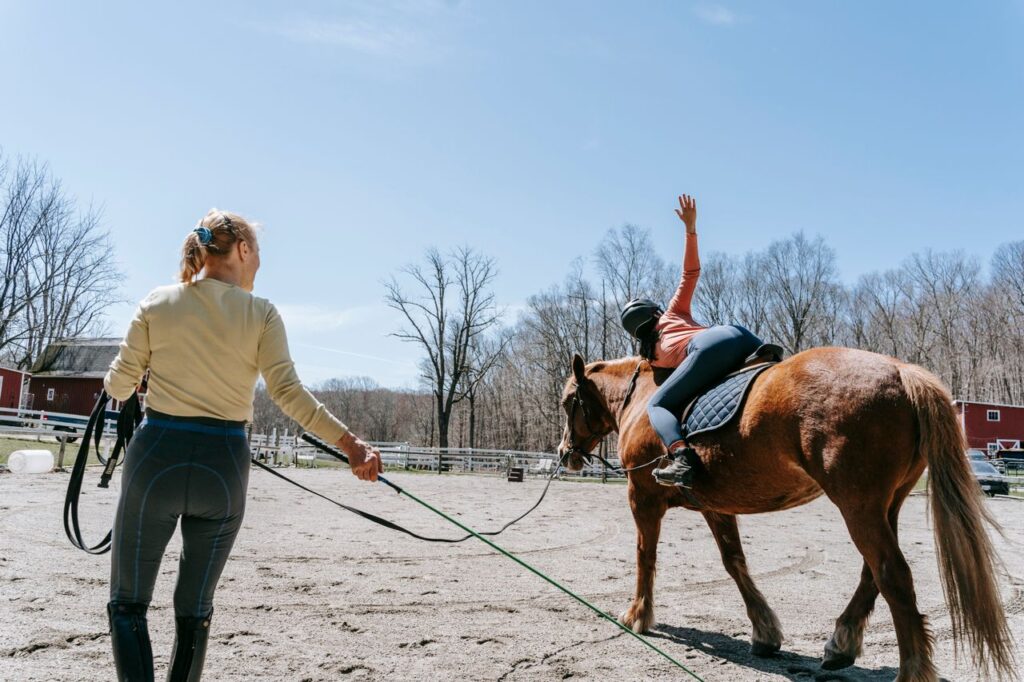
Parents who check hippotherapy prices often wonder why the price of a single session can be higher than for many other forms of therapy . However, it's important to remember that hippotherapy isn't just horseback riding or standard rehabilitation exercises. During a session, the child is typically assisted not only by a hippotherapist but also by a person leading the horse, and for children requiring more support, additional assistants walking alongside. Such a team is necessary to ensure that the child can benefit from the horse's movement in a safe, controlled manner, and in accordance with the therapeutic goal.
The horse itself also has a significant impact on the cost of hippotherapy. A hippotherapy horse must be carefully selected, calm, predictable, well-trained, and prepared to work with individuals with various motor, sensory, and emotional needs. Its upkeep includes daily feeding, veterinary care, farrier services, training, accommodation, and rest time, as therapy horses cannot work with patients for many hours a day without a break. In practice, this means that the facility incurs fixed costs regardless of how many sessions are conducted on a given day.
The hippotherapy price list also includes specialized infrastructure : a safe yard or arena, appropriate flooring, ramps or platforms to facilitate boarding, hippotherapy harnesses, helmets, exercise aids, and insurance. Furthermore, there are the costs of ongoing training for therapists, as well-conducted hippotherapy requires up-to-date knowledge in rehabilitation, safe horsemanship, and the needs of patients with various diagnoses. Therefore, when analyzing the price list, it's worth asking not only about the price itself but also about the qualifications of the instructor, the number of support staff, the horse's preparation, and the facility's safety standards.
Hippotherapy – what is worth remembering?
Hippotherapy isn't recreational horseback riding, but a planned therapeutic process in which a properly prepared horse, a qualified specialist, and a clearly defined therapy goal work together to support a child's development. If a parent is wondering who might benefit from hippotherapy, the most important answer is: for children for whom a doctor and therapist see specific indications and the opportunity to safely work on movement, emotional regulation, communication, or relationships . It's worth remembering that the question "hippotherapy—what is it?" isn't just about sitting in the saddle, but also about contact with the horse, sensory input, working on posture, and building a sense of agency.
Well-conducted hippotherapy can be a valuable addition to rehabilitation and therapy, but it should always be tailored to the child's individual needs, abilities and health.
Bibliography:
- Bednarczyk M., Hippotherapy as a form of rehabilitation and support for the social inclusion of people with disabilities, "Disabled Student. Sketches and Dissertations", no. 15 (8), 2015.
- De Miguel A., De Miguel MD, Lucena-Antón D., Rubio MD, Efectos de la hippoterapia sobre la función motora en personas con síndrome de Down: revisión sistemática, Revista de Neurología, 67 (7), 2018.
- Koca TT, Ataseven H., What is hippotherapy? The indications and effectiveness of hippotherapy, Northern Clinics of Istanbul, 2 (3), 2015.
- Peia F., et al., Effects of Hippotherapy on Postural Control in Children With Cerebral Palsy: A Systematic Review, Pediatric Physical Therapy, 35 (2), 2023.
- Santos de Assis G., et al., Physical therapy with hippotherapy compared to physical therapy alone in children with cerebral palsy: systematic review and meta-analysis Developmental Medicine & Child Neurology, 64 (2), 2021.
- Sobuś M., Łagan S., Hippotherapy as a natural form of rehabilitation, "Current Problems of Biomechanics", no. 4, 2010.
- Polish Hippotherapy Society (PTHip), Hippotherapy. A Guide for Physicians, edited by Anna Strumińska(accessed May 11, 2026)
- Polish Hippotherapy Society (PTHip), Canons of Polish Hippotherapy, version adopted in 2007 (accessed on 11.05.2026/XNUMX/XNUMX)
Author