




Allergy symptoms in children – when to suspect an inhalant allergy and how to limit pollen at home?



For another week, the child has a runny nose, rubs their nose, wakes up at night, and it's increasingly difficult to tell whether it's a lingering infection or the first symptoms of a childhood allergy. Parents are starting to connect the dots: the symptoms return in similar situations, become more severe, and the child doesn't appear to have a typical cold. However, allergies in children can be difficult to recognize, especially in toddlers who can't yet express their itchy nose, scratchy throat, or burning eyes. In this article, we explain when a pollen allergy in a child may be one of the possible causes of symptoms, what to look out for depending on age, and how to limit exposure to pollen in the home.
Pollen allergy in a child – why are its symptoms easily confused with an infection?
Inhalant allergies , often colloquially referred to as pollen allergies, are an exaggerated, specific response of the immune system, which mistakenly identifies harmless substances present in the air as a threat. In practice, their symptoms can mimic a cold – parents often see a runny nose, cough, poor sleep , or irritability and naturally think, "Another infection."
However, several details may suggest an allergic background of the symptoms: the symptoms return seasonally, become more severe during pollen seasons, and often appear in similar circumstances – after a walk, playing on the grass, returning from kindergarten or after airing the room.
Expert advises
Unlike many viral infections, allergies are usually not accompanied by fever, although the absence of a fever alone is not sufficient to diagnose an allergy. In my office, I often hear from parents that their child 'has a constant cold.' However, if the runny nose is runny, recurs seasonally, is accompanied by an itchy nose, sneezing in bursts (many times in a row), or watery and red eyes, it's worth considering allergic causes for the symptoms and discussing them with your pediatrician.


Allergies can cause quite specific, but not always obvious, symptoms in children . So what should parents be especially aware of? What symptoms might indicate a pollen allergy in a child?
The most characteristic symptoms of pollen allergy in children
Typical symptoms of pollen allergy in children include:
- watery, clear runny nose, which does not resemble the thick discharge typical of many infections;
- Stuffed nose and difficulty breathing freely through the nose;
- sneezing in bursts;
- itchy nose – forces the child to frequently, characteristically rub the nose with the hand from the bottom up (so-called allergic salute), which over time may lead to the formation of a transverse furrow on the nose;
- itching, redness, burning and watery eyes.
In some children, nasal congestion also causes them to breathe through their mouths, especially during sleep or physical activity. Allergies in children can also manifest as coughing, especially when nasal secretions run down the back of the throat and irritate the airways. This is one reason why a parent may feel like a "runny nose has turned into a cough ," even though the symptoms don't resemble a typical infection.

Less obvious allergy symptoms in children
It's worth emphasizing that allergic rhinitis isn't just a "runny nose" problem. Allergy symptoms in children can also affect sleep, well-being, and daily functioning, so it's also worth paying attention to symptoms that, at first glance, might not be associated with allergies:
- restless sleep, snoring or frequent awakenings;
- difficulties with concentration and learning – severe runny nose makes breathing difficult at night, which leads to fatigue and irritability during the day;
- frequent clearing of the throat or coughing;
- dark circles under the eyes and additional skin folds on the lower eyelid (so-called Dennie-Morgan folds) resulting from irritation of the skin around the eyes;
- faster fatigue and reluctance to play outdoors, especially if symptoms worsen after leaving the house.
It is worth remembering, however, that the symptoms may look slightly different in an infant, a 2-year-old, and even different in a preschooler or a school-age child.
Pollen allergy in an infant and allergy in a one-year-old child – is it possible?
Although allergies can occur in young children, typical seasonal inhalant allergies are much less common in infants than in preschoolers or school-age children . Atopic diseases often progress along the so-called "allergic march," meaning that the nature of the symptoms changes with the patient's age.
In the first months of life , gastrointestinal and skin symptoms (e.g., atopic dermatitis ) predominate , with allergic rhinitis and asthma typically emerging later in life. In a one-year-old child, the spectrum of allergies may begin to expand. Although skin lesions still predominate, some children may experience their first reactions to year-round allergens , such as house dust mites, manifesting as wheezing or a nocturnal, paroxysmal cough.
Expert advises
Pollen allergy in infants is more difficult to diagnose because a runny nose, cough, wheezing, sleep problems, or frequent face rubbing can have many causes unrelated to pollen allergy in such a young child. It's important to know that allergic rhinitis is most often diagnosed between the ages of 4 and 7. Therefore, allergy-like symptoms in young children always require careful interpretation, and parents should not self-diagnose an allergy based on a persistent runny nose alone. Even if an allergy is suspected in a one-year-old child, it's crucial to rule out recurrent viral respiratory infections, which are very common in this age group.
Symptoms of inhalant allergy in 2-year-old, 4-year-old and 5-year-old children: what do they look like in practice?
As a child ages, not only does the way allergies manifest themselves change, but so does how parents can recognize them . A two-year-old typically won't say, "My nose is itchy" or "My eye is burning," but they will demonstrate their discomfort through their behavior. Preschoolers are increasingly able to name their symptoms, and in older children, it's easier to observe the impact of allergies on sleep, concentration, play, learning, and outdoor activities.
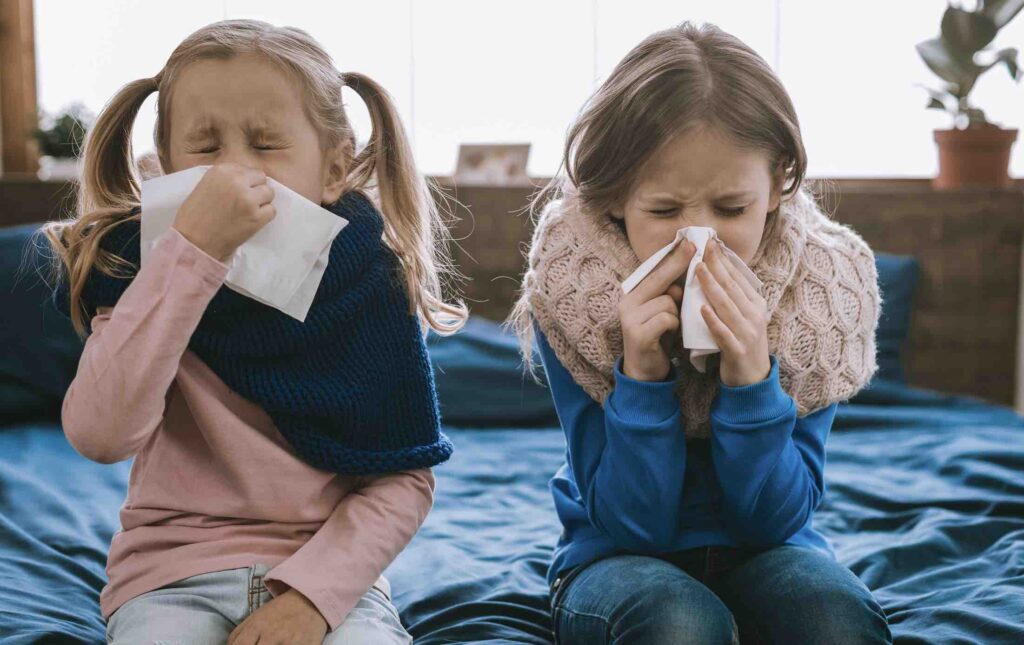
Symptoms of inhalant allergy in 2-year-old children
In the case of allergy symptoms in 2-year-olds, we often observe an evolution toward respiratory symptoms . This is the age at which so-called early childhood asthma may appear , manifesting as wheezing and coughing after exercise or laughter. However, allergy symptoms in 2-year-olds can be difficult to identify because children at this age often experience infectious illnesses, especially if they attend daycare.
Therefore, instead of focusing solely on the runny nose, it's worth observing a recurring pattern : whether symptoms return after walks, after contact with grass, during certain months of the year, or after airing out the room. It can be helpful to keep a diary of when inhalant allergy symptoms worsen, how long they last, and whether they return in similar situations.
Expert advises
Caution is especially important in this age group: allergy-like symptoms can have many causes, so recurring runny nose, cough, wheezing or sleep problems should be discussed with a pediatrician.
Allergy symptoms in 4-year-old children – could it be a pollen allergy?
Allergy symptoms in a 4-year-old child are already very similar to those seen in adults – hay fever and eye symptoms predominate . Preschoolers are also starting to better describe what they're feeling, making it easier for a doctor to make an accurate diagnosis, and parents don't have to rely solely on observing their child's behavior.
Allergy symptoms in children 5 years and older
Allergy symptoms in 5-year-old children are more likely to be seen not only in their well-being but also in their functioning in groups. A 5-year-old may be less willing to engage in active play, tire more easily, sleep less well , and have less energy during the day for table activities that require concentration.
Expert advises
At this age, children are more likely to identify less obvious symptoms, such as an itchy throat, palate, nose, or eyes. If, in addition to the symptoms of allergic rhinitis, frequent coughing attacks, wheezing, shortness of breath, or a significantly reduced exercise tolerance occur, it's worth consulting a doctor, as inhalant allergies can coexist with other respiratory diseases, such as the aforementioned early childhood asthma.
Allergy symptoms in school children and teenagers
In school-age children and adolescents, symptoms of inhalant allergies may be similar to those seen in older preschoolers, but their consequences are usually more pronounced in academics, sports, and daily independence. Students may have difficulty concentrating in class, feel sleepy during the day, struggle with training , or avoid outdoor activities because they feel worse afterward.
How to reduce pollen in your home when your child has symptoms of an inhalant allergy?
Completely eliminating allergens from a child's environment is virtually impossible, as pollen is carried long distances by the wind. However, you can significantly reduce its concentration in your home by implementing a set of simple but systematic preventative measures that will improve the quality of life of a young allergy sufferer.
Simple habits that reduce pollen in your home
- close the windows in your child's room during high pollen counts, especially on dry, warm and windy days and when the local pollen count report shows high values;
If you want to check what allergens we are exposed to in particular months of the year, it is worth reading our separate article about the pollen calendar.
- air the rooms briefly, preferably at night or early in the morning, when local pollen concentrations are lower. A good time to air rooms is also after rain;
- wash your child's face and hands after returning from a walkto remove pollen from the skin;
- change clothes after being outdoors for a long time, especially after playing on the grass or in the park;
- do not dry bedding and clothes outside during periods of increased pollen count;
- clean regularly – you should frequently vacuum the floors (preferably with a vacuum cleaner with a HEPA filter) and wipe the surfaces of furniture wet to avoid stirring up dust and pollen into the air.
Such actions help reduce the introduction of pollen into the home and its settlement on surfaces, but not all particles can be stopped by doors or windows.
Inhalant allergies in children: An air purifier helps reduce allergens at home.
Expert advises
An air purifier can be an important support for home habits that support a child with symptoms of inhalant allergies. While it doesn't cure allergies and doesn't replace diagnostics or treatment recommended by a doctor, an air purifier placed in a child's bedroom can capture even microscopic pollen fragments and mold spores that get inside despite closed windows. Additionally, it's important to ensure proper air humidification, maintaining it at 40-50%, which prevents drying of mucous membranes and soothes reactions to irritants.
An example of a device that fits into this home strategy for reducing inhalant allergens is the Dyson Purifier Humidify+Cool™ PH2 De-NOx – an air purifier, fan, and humidifier in one . The manufacturer states that the device uses a fully sealed, 3-stage HEPA H13 filtration system that captures 99,95% of ultrafine particles, while Air Multiplier™ technology distributes purified and humidified air throughout the room.
The Dyson Purifier Humidify+Cool™ PH2 De-NOx model has received a Positive Opinion from the Institute of Mother and Child and is recommended by the Polish Society of Allergology and can be considered as one of the elements of caring for air quality in a child's room with symptoms of inhalant allergies.
Recommended products


Pediatrician in the One-Day Hospitalization Department, Institute of Mother and Child
In conclusion: small changes at home, big relief in everyday life
Living with a young allergy sufferer can be challenging, especially when symptoms come back in waves, the child sleeps less well, tires more easily, and parents struggle to understand what's really bothering them. That's why it's so important to combine careful observation with daily preventative care : keeping track of when symptoms worsen, limiting pollen levels in the home, and maintaining good air quality in the room where the child rests.
Such activities do not replace medical diagnosis or treatment , but they can actually support the child's comfort and make it easier for the family to function during the increased pollen season.
*This article is for informational purposes only and does not replace individual medical advice, so if you observe disturbing, severe or recurring symptoms in your child and suspect an inhalant allergy, consult a pediatrician or allergist.
Medical consultation